
Zuerst die Frage: Was sollte der Käufer entscheiden?
Bei der Auswahl eines Luftkompressors für den Reifenservice – Druck, Durchfluss und Druckluftbehälter – kommt es vor allem auf die Aufpumpgeschwindigkeit und einen reibungslosen Arbeitsablauf an. Beginnen Sie nicht mit PS-Zahl, Tankgröße oder einer bekannten Marke. Konzentrieren Sie sich zunächst auf die Aufgabe, die die Druckluft erfüllen soll, und berechnen Sie daraus den benötigten Druck am Einsatzort, den nutzbaren Luftdurchsatz, die Einsatzdauer und die Umgebungsbedingungen. So vermeiden Sie einen häufigen Fehler bei der Beschaffung: den Kauf eines Kompressors, der zwar groß genug erscheint, aber unter realen Betriebsbedingungen nicht die benötigte Luftmenge liefert.
Typische Beispiele sind Pkw-, Lkw- und Gerätereifen. Zu den praktischen Prüfpunkten gehören Zieldruck, Füllmenge, Behältervolumen, Schlauchdurchmesser und Beanspruchung. Diese Variablen beeinflussen sich gegenseitig. Ein Druckverlust durch einen zu kleinen Schlauch kann einen ausreichend dimensionierten Kompressor unterdimensioniert erscheinen lassen; ein großer Behälter kann einen Druckstoß zwar kurzzeitig kaschieren, aber einen unterdimensionierten Kompressor nicht dauerhaft versorgen; eine hohe Umgebungstemperatur kann die Kühlreserve verringern, selbst wenn Druck und Durchfluss korrekt erscheinen.
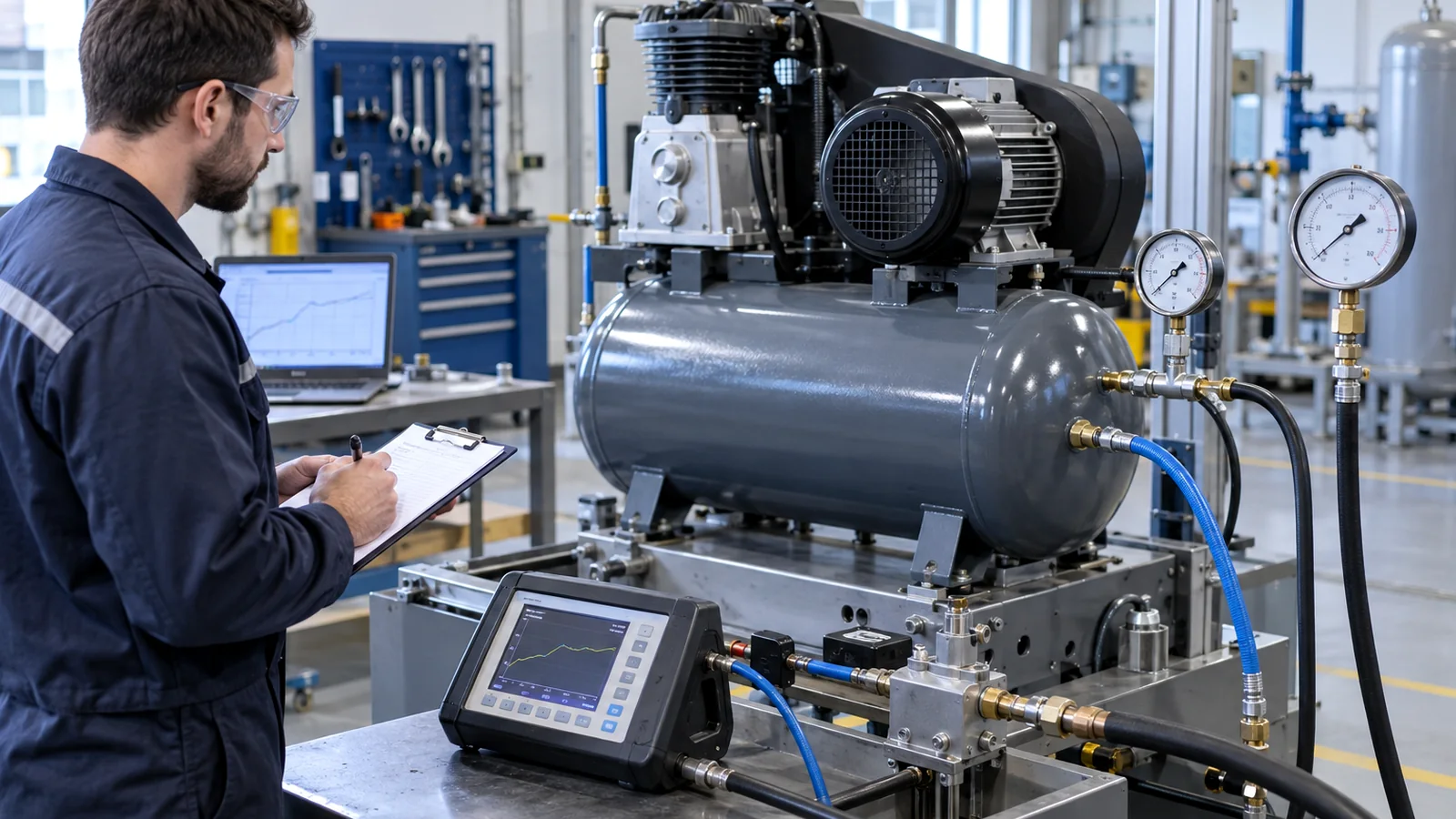
Übersetzen Sie die Anwendung in Druck und Durchfluss.
Notieren Sie den erforderlichen Betriebsdruck für jeden Druckluftverbraucher und messen oder ermitteln Sie dessen Volumenstrombedarf. Können mehrere Geräte gleichzeitig betrieben werden, addieren Sie den jeweiligen Bedarf anstelle des gesamten installierten Bedarfs. Verwenden Sie für intermittierend arbeitende Geräte einen realistischen Betriebsfaktor, achten Sie aber darauf, dass kurze Druckspitzen nicht auftreten. Der Kompressor muss sich von diesen Spitzen erholen, ohne die gesamte Schicht mit instabilem Druck zu arbeiten.
Der Druck sollte nicht nur am Kompressorausgang, sondern auch am Verbraucher angegeben werden. Verteilerrohre, Filter, Trockner, Ventile, Schnellkupplungen und flexible Schläuche verbrauchen Druck. Je länger die Leitung und je größer der Durchfluss, desto wichtiger werden Durchmesser und Auslegung. Eine gute Spezifikation unterscheidet den Kompressorausgangsdruck vom minimal zulässigen Druck am Verbrauchsort und gibt den zu erwartenden Druckverlust an.
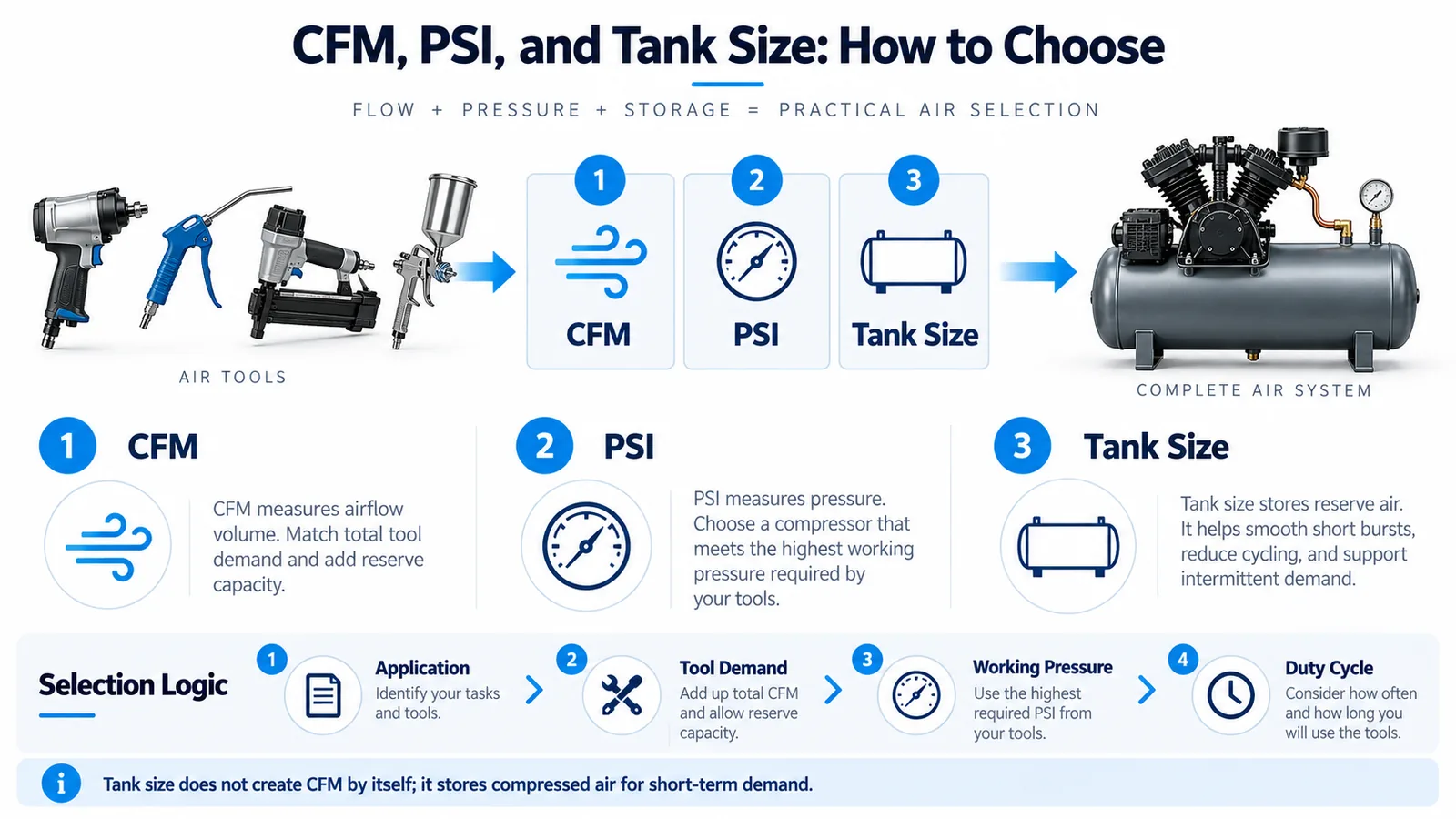
Die Rolle des Empfängerspeichers verstehen
Ein Druckluftbehälter speichert Druckluft und gleicht kurzzeitige Druckschwankungen zwischen Kompressorleistung und -bedarf aus. Er kann häufiges Ein- und Ausschalten reduzieren und einem System helfen, kurzzeitige Druckspitzen zu überstehen, erzeugt aber keine Druckluft. Bei anhaltender Last sinkt der Druck weiter, wenn der Verbrauch die Kompressorleistung übersteigt. Daher müssen Behälterkapazität und Druckluftleistung des Kompressors gemeinsam betrachtet werden.
Bei der Auswahl des Druckluftbehälters sollten auch Entwässerung und Inspektionszugang berücksichtigt werden. Die Druckluft erwärmt sich; beim Abkühlen kann Feuchtigkeit kondensieren. Feuchte Klimazonen und lange Laufzeiten können erhebliche Mengen an Kondenswasser erzeugen. Automatische Kondensatabscheider reduzieren den manuellen Aufwand, müssen aber dennoch regelmäßig überprüft werden. Anforderungen an die Luftqualität nachgelagerter Systeme können den Einsatz eines Trockners, eines Koaleszenzfilters oder einer zusätzlichen Aufbereitung nach dem Druckluftbehälter erforderlich machen.
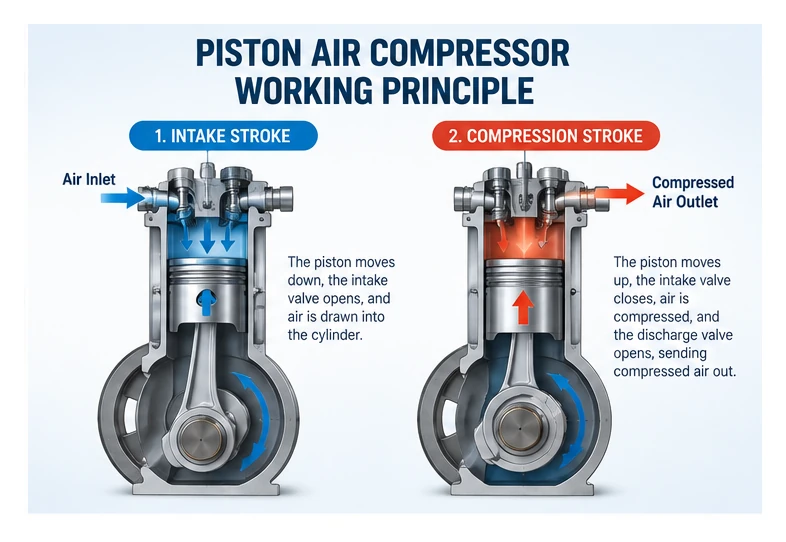
Kompressorarchitektur an Arbeitszyklus anpassen
Kolben- oder modulare Druckluftkompressoren sind oft effektiv, wenn der Bedarf intermittierend ist und die gespeicherte Druckluft kurze Spitzenwerte abdecken kann. Schraubenkompressoren eignen sich besonders für lange, stabile Betriebszeiten, da der Kompressionsprozess kontinuierlich abläuft. Ölfreie Bauweisen werden gewählt, wenn das Kontaminationsrisiko aus dem Kompressionsraum relevant ist, während Mikroölsysteme geeignet sein können, wenn die Prozessanforderungen ein Schmierstoffmanagement und eine nachgelagerte Aufbereitung zulassen.
Die Wahl des Kompressors sollte Betriebsstunden, Starts pro Stunde, Lastschwankungen, Wartungsfreundlichkeit und Installationsumgebung berücksichtigen. Eine Werkstatt, die einen Schlagschrauber nur wenige Sekunden am Stück betreibt, ist nicht mit einer Produktionslinie vergleichbar, die während einer Schicht Druckluft verbraucht. Ebenso wenig kann ein Prozess mit 20–40 bar einfach durch Erhöhen des Drucks als Standard-Werkstattsystem mit 8 bar behandelt werden; die Kompressorarchitektur und alle nachgeschalteten druckfesten Komponenten müssen geeignet sein.
Planen Sie die Installation als Teil der Aufführung.
Kompression erzeugt Wärme. Stellen Sie das Gerät an einem Ort auf, an dem kühle Ansaugluft vorhanden ist und die heiße Abluft ungehindert entweichen kann. Achten Sie auf ausreichende Wartungsabstände um Filter, Abdeckungen, Abflüsse und Kühlflächen. Ein in einem kleinen Raum dicht untergebrachter Kompressor kann heißer laufen, schwieriger zu warten sein und weniger zuverlässig arbeiten, selbst wenn die Nennleistung korrekt war.
Die elektrische Planung umfasst Spannung, Frequenz, Phase, Schutz, Leiterdimensionierung und Erdung. Bei Exportprojekten sollte die Versorgung am Bestimmungsort vor Produktionsbeginn bestätigt werden. Auf der Druckluftseite sind die Rohrleitungen entsprechend dem erwarteten Durchfluss zu dimensionieren, unnötige Engpässe zu minimieren, gegebenenfalls Gefälle und Entwässerung zu berücksichtigen und Geräte so zu isolieren, dass Wartungsarbeiten keine Abschaltung anderer Verbraucher erfordern. Bei Hochdrucksystemen ist die Druckfestigkeit aller nachgeschalteten Komponenten zu überprüfen.
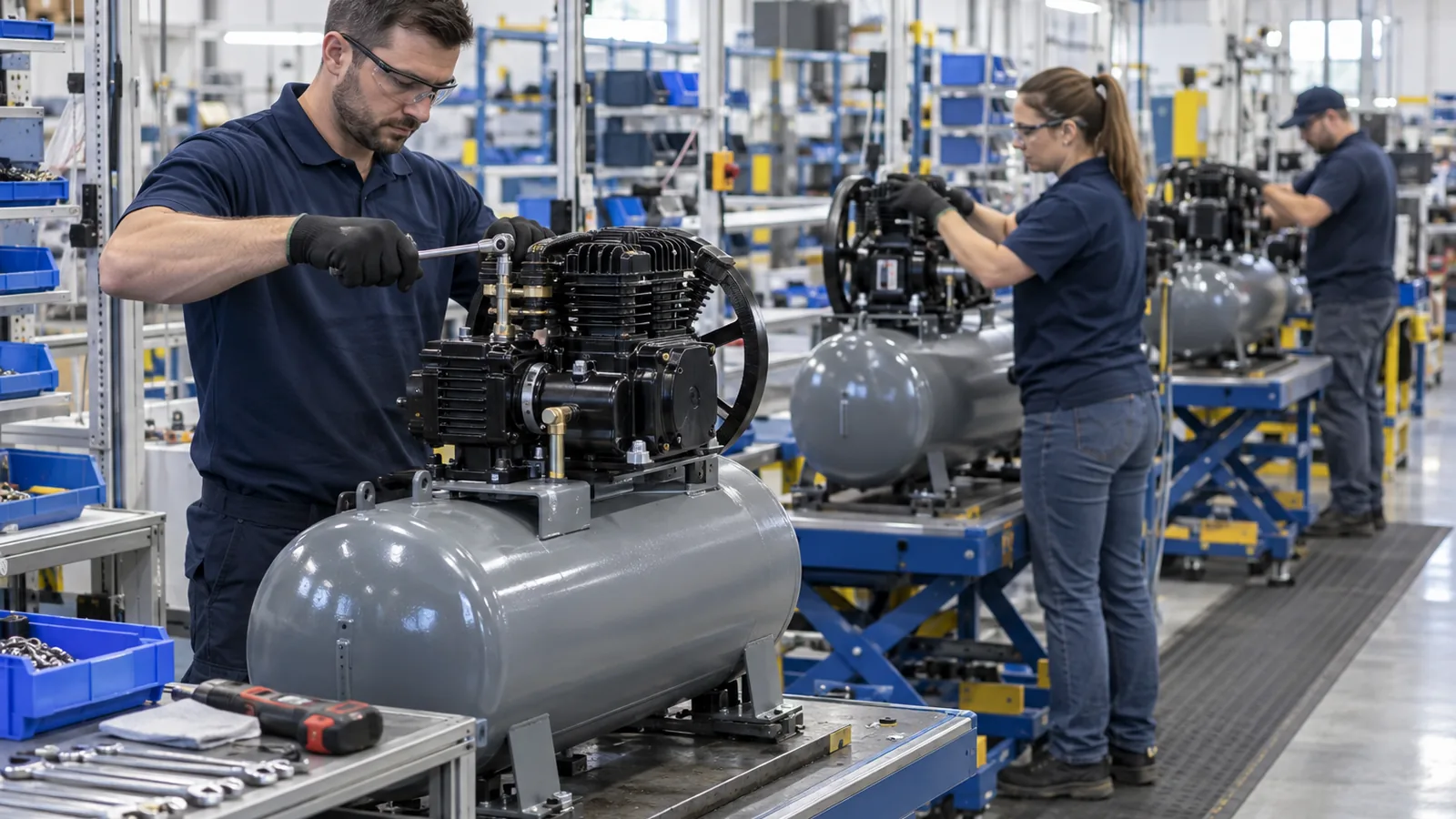
Verwenden Sie eine Inbetriebnahmebasislinie für die zukünftige Fehlersuche.
Bevor die Anlage in den Normalbetrieb geht, erfassen Sie Leerlauf- und Lastdruck, Betriebsstrom, Wiederanlaufzeit, Temperatur, Abflussverhalten sowie alle üblichen Geräusche oder Vibrationen. Prüfen Sie die Anschlüsse auf Undichtigkeiten und stellen Sie sicher, dass die Steuerungen zum Entladen, Stoppen oder Regulieren wie vorgesehen funktionieren. Eine solche Basismessung beschleunigt die spätere Diagnose erheblich, da das Wartungspersonal ein neues Symptom mit dem bekannten Normalverhalten vergleichen kann.
Sollte der Druck später sinken, beginnen Sie mit der Systembeobachtung. Prüfen Sie, ob der Bedarf gestiegen ist, ob ein Ventil offen geblieben ist, ob Filter verstopft sind und ob neue Leckagen aufgetreten sind. Steigt die Temperatur, überprüfen Sie Kühlflächen, Belüftung und Ansaugbedingungen, bevor Sie von einem internen Kompressorfehler ausgehen. Durch diese systematische Vorgehensweise vermeiden Sie den Austausch teurer Bauteile, wenn die Ursache extern liegt.
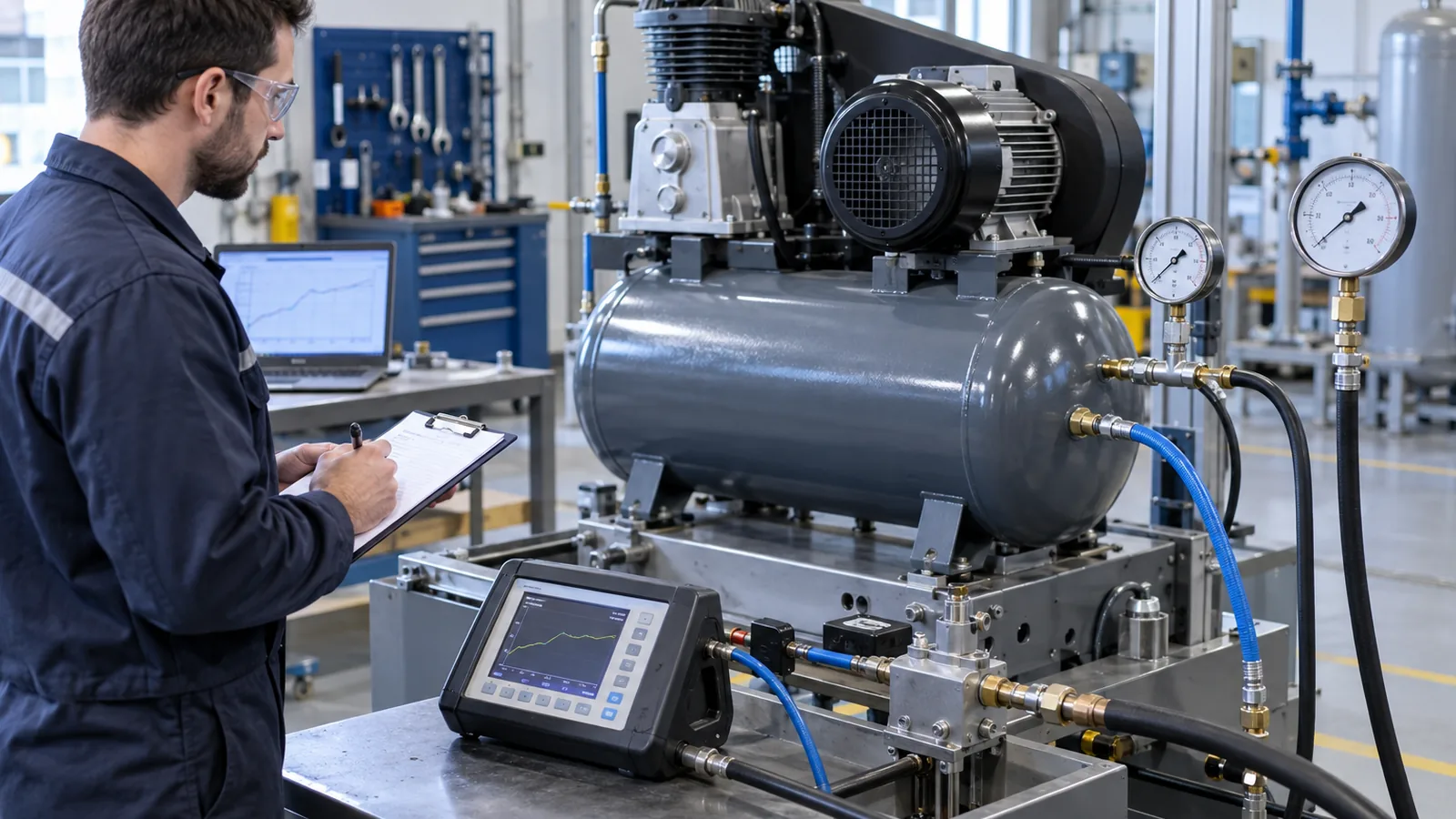
Wartungsprioritäten zum Schutz der nutzbaren Luft
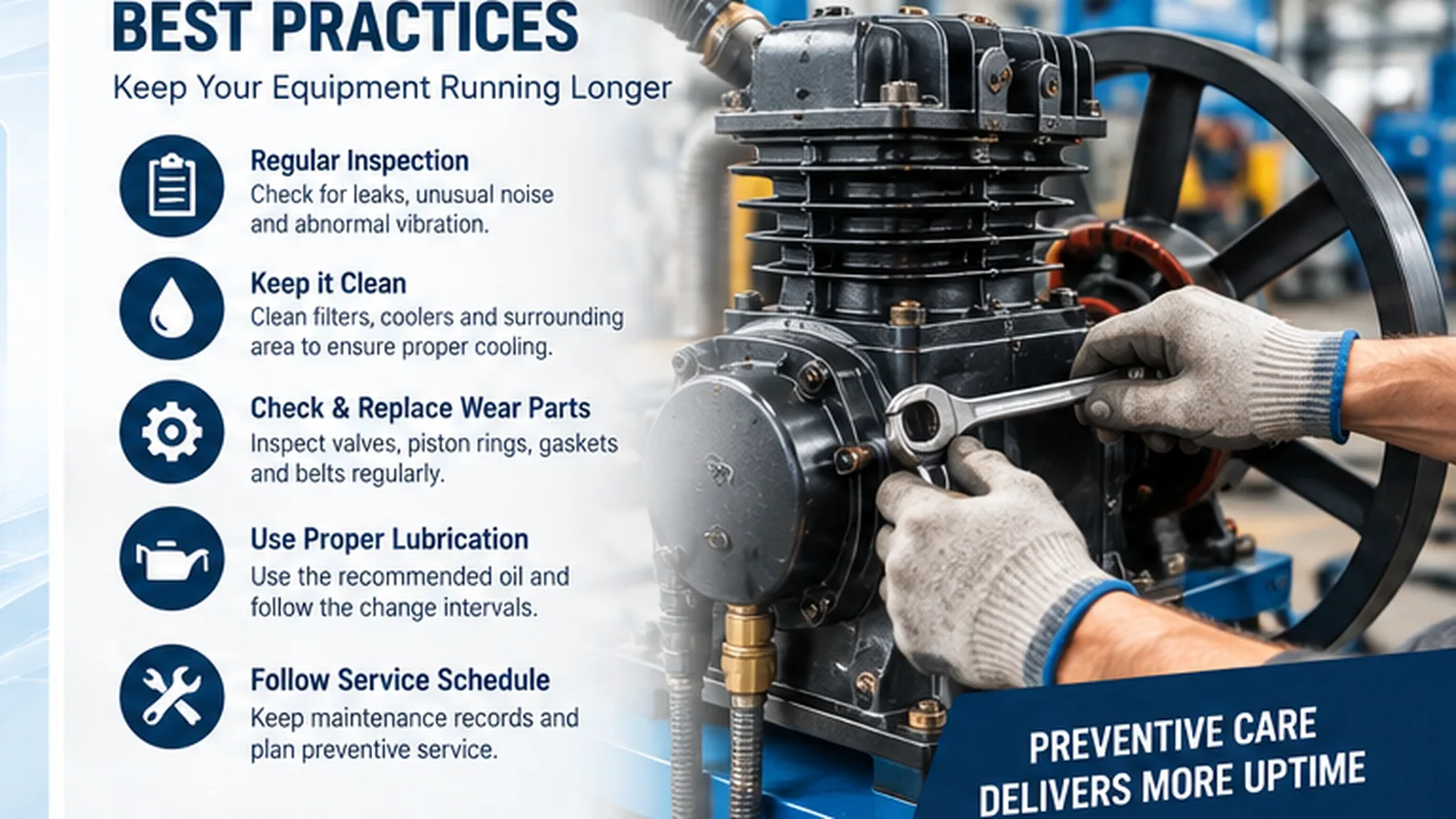
Die Wartung dient der Aufrechterhaltung von Luftstrom, Kühlung, Abdichtung und Steuerung. Ansaugfilter sauber halten, Abläufe funktionsfähig und Anschlüsse dicht verschließen. Die vorgegebenen Schmier- oder Wasserkreislaufanforderungen für die verwendete Kompressortechnologie beachten. Riemen, Kupplungen und Antriebskomponenten, sofern vorhanden, prüfen. Kühler reinigen, bevor Verschmutzungen die Wärmeentwicklung behindern. Wartungstermine, Betriebsstunden und jegliche Druck- oder Temperaturänderungen dokumentieren.
Leckagemanagement ist ein wichtiger Bestandteil des Wartungsprogramms, da Leckagen die Kapazität kontinuierlich verringern können. Durch die Reparatur von Leckagen lässt sich der Druck wiederherstellen und eine unnötige Kompressorausdehnung verhindern. In staubigen oder feuchten Umgebungen kann eine höhere Inspektionsfrequenz erforderlich sein. Ziel ist es nicht, mehr Wartungsarbeiten durchzuführen, sondern Verschleiß frühzeitig zu erkennen, damit das System weiterhin die benötigte Luft effizient und zuverlässig liefert.
Checkliste für die Beschaffung eines Luftkompressors für den Reifenservice
Senden Sie die benötigten Informationen zu Druck am Einsatzort, Luftdurchsatz, Spitzendauer, Betriebsstunden pro Tag, Spannung/Frequenz/Phase, Umgebungsbedingungen, Luftqualitätsanforderungen, Menge, Bestimmungsort und Installationsbeschränkungen. Bei Austausch eines vorhandenen Kompressors geben Sie bitte das aktuelle Modell, die Druckeinstellung, das gemessene Lastverhalten und den Grund für den Austausch an. Bei einem neuen System ermitteln Sie bitte die pneumatischen Verbraucher, anstatt die Kompressorgröße zu schätzen.
Für Prozessanlagen geben Sie bitte Anschlussgröße, zulässige Druckabweichung und alle erforderlichen Zeichnungen oder Dokumentationen an. Bei Außen- oder mobilen Anlagen berücksichtigen Sie bitte Witterungseinflüsse, Staubbelastung, Transportierbarkeit und Zugangsbeschränkungen. Definieren Sie bei Reinraumprozessen den Kontaminationsgrenzwert, anstatt sich auf vage Beschreibungen wie „saubere Luft“ zu verlassen. Je genauer die Randbedingungen formuliert sind, desto aussagekräftiger sind Angebot und technische Prüfung.
Zugehörige Planung: Überblick über Kompressorfamilien, Nutzen Sie den Auswahlleitfaden, Und Vergleichen Sie die Bewerbungsanforderungen.
Häufig gestellte Fragen
Reicht der maximale Druck für die Auswahl eines Kompressors aus?
Nein. Das System muss bei Betriebsdruck einen ausreichenden Luftdurchsatz liefern. Der maximale Druck allein beschreibt nicht die nutzbare Kapazität.
Wie viel Reservekapazität sollte ich einplanen?
Berücksichtigen Sie dokumentierte Zuschläge für realistische Leckagen, Unsicherheiten und geplantes Wachstum. Vermeiden Sie willkürliche Überdimensionierung, die schwache Nachfragedaten verschleiert.
Führt ein größerer Receiver immer zu einer besseren Leistung?
Es verbessert die kurzfristige Speicherung und kann die Taktung reduzieren, aber die dauerhafte Nachfrage hängt weiterhin von der Kompressorleistung ab.
Welche Daten sollten an einem bestehenden System gemessen werden?
Messen Sie den Druck unter Last, den Druck am Verbrauchsort, das Betriebs-/Lastprofil, das Rückgewinnungsverhalten und, falls verfügbar, den tatsächlichen Durchfluss. Identifizieren Sie außerdem Leckagen, Verengungen und den Druckabfall in der Aufbereitungsanlage.
Feldmessungen, die die Entscheidung vertretbar machen
Für Luftkompressor für den Reifenservice: Druck, Durchfluss und Planung des DruckbehältersDer sinnvolle Ausgangspunkt ist, die tatsächlichen Werkzeuge oder Prozesse in simultanen Luftstrom, Mindestdruck und ein realistisches Betriebsmuster zu übersetzen, anstatt sich allein auf die Tankgröße zu verlassen. Erfassen Sie Daten zum Werkzeugluftverbrauch, zur Anzahl der gleichzeitigen Anwender, zum minimalen Druck am Entnahmepunkt, zur Schlauch- und Rohrlänge, zur Spitzendauer, zur Erholungszeit, zur Behältergröße, zur Umgebungsstaubbelastung bzw. Luftfeuchtigkeit und zu den täglichen Betriebsstunden. Eine einzelne Messung bei geringem Bedarf reicht nicht aus. Erfassen Sie die Bedingungen während der realistischen Spitzenlast und notieren Sie, welche Werkzeuge, Ventile, Filter, Trockner oder Produktionsschritte gleichzeitig aktiv sind. Dadurch werden die Daten reproduzierbar und ein anderer Ingenieur kann nachvollziehen, warum die gewählte Konfiguration als ausreichend erachtet wurde.
Messwerte sollten stets im Kontext betrachtet werden. Achten Sie darauf, ob der Kompressor seine Betriebstemperatur erreicht hat, ob die Umgebungstemperatur ungewöhnlich hoch ist, ob die Kondensatabscheider funktionieren und ob das Verteilsystem kürzlich geändert wurde. Bei Verdacht auf Druckabfall vergleichen Sie einen Messwert in der Nähe des Kompressors mit einem Messwert am kritischen Verbraucher unter gleicher Last. Dieser einfache Vergleich zeigt oft, ob der nächste Handlungsbedarf am Kompressor, im Speicher und der Steuerung oder im Verteilsystem liegt.
Entscheidungsmatrix: Was vor einem Gerätewechsel verglichen werden sollte
| Entscheidungspunkt | Was ist zu überprüfen? | Warum es wichtig ist |
|---|---|---|
| Betriebspunkt | Druckluftverbrauch des Werkzeugs, Anzahl gleichzeitiger Benutzer, minimaler Druck am Einsatzort, Schlauch- und Rohrlänge, Spitzendauer, Erholungszeit, Behältergröße, Umgebungsstaub oder -feuchtigkeit und tägliche Betriebsstunden | Die Maschine muss anhand des Drucks und der Belastung beurteilt werden, die in der Anwendung tatsächlich auftreten, und nicht anhand von Spitzenwerten für Motor oder Tank. |
| Systemverluste | Druck vor und nach der Behandlung, Rohrleitungen und flexible Schläuche während der Spitzenlast. | Eine Verengung kann die gleichen Symptome wie eine unzureichende Kompressorleistung hervorrufen, erfordert aber eine andere Korrekturmaßnahme. |
| Installationsspielraum | Halten Sie die Schlauchverläufe praktisch, vermeiden Sie einschränkende Kupplungen, sorgen Sie für Entwässerung und saubere Ansaugluft, schützen Sie die Maschine vor Staub und Wärmerückführung und positionieren Sie den Behälter und die Bedienelemente so, dass regelmäßige Kontrollen möglich sind. | Die Bedingungen für Kühlung, Zugang, Entwässerung und Verteilung entscheiden darüber, ob die dokumentierte Leistung im Betrieb aufrechterhalten werden kann. |
| Akzeptanzmethode | Führen Sie die anspruchsvollste realistische Werkzeugkombination durch, erfassen Sie den Kompressor- und den Druck an der Entnahmestelle, überprüfen Sie die Druckwiederherstellung nach einem Druckstoß, suchen Sie nach Lecks und stellen Sie sicher, dass die elektrische Versorgung bzw. die Motorversorgung stabil bleibt. | Durch die vorherige Festlegung der Prüfkriterien lassen sich Meinungsverschiedenheiten zwischen Einkauf, Instandhaltung und Lieferant nach der Inbetriebnahme vermeiden. |
Der Vergleich sollte im gesamten Projekt auf denselben Einheiten und Testgrundlagen basieren. Werden die Luftmengen bei unterschiedlichen Drücken oder unter verschiedenen Referenzbedingungen angegeben, muss der Vergleich vor der Schlussfolgerung normalisiert werden. Eine übersichtliche Entscheidungstabelle ist besonders hilfreich, wenn mehrere ähnliche Modelle in Betracht gezogen werden, da sie die Gründe für die Wahl einer bestimmten Konfiguration darlegt, anstatt lediglich die endgültige Modellnummer zu dokumentieren.
Installationsprüfungen, die die erwartete Leistung gewährleisten
Halten Sie die Schlauchleitungen praktisch, vermeiden Sie Engstellen an den Kupplungen, sorgen Sie für Entwässerung und saubere Ansaugluft, schützen Sie die Maschine vor Staub und Abwärme und positionieren Sie den Behälter und die Bedienelemente so, dass regelmäßige Kontrollen möglich sind. Überprüfen Sie diese Punkte vor der Inbetriebnahme, da Installationsmängel die bei der Dimensionierung vorgesehene Sicherheitsreserve aufzehren können. Eine lange, unterdimensionierte Rohrleitung, ein verschmutzter Einlass oder heiße Abluft, die zum Einlass zurückfließt, können die nutzbare Leistung reduzieren, ohne dass Änderungen am Kompressor selbst vorgenommen werden müssen. Die Installationszeichnung sollte Absperrvorrichtungen, Entwässerung, Aufbereitungsanlagen und den Weg zu den kritischen Verbrauchern zeigen, damit Fragen zu Druckverlust und Wartungszugang vor der endgültigen Montage der Maschine geklärt werden können.
Prüfen Sie nach der Installation das System unter Last und nicht nur im Leerlauf. Stellen Sie sicher, dass die Rohrleitungen ausreichend gestützt sind, flexible Verbindungen nicht unter Spannung stehen, Kondensat abfließen kann, Paneele und Filter zugänglich bleiben und der Kühlweg nicht durch Wände oder gelagertes Material blockiert ist. Prüfen Sie bei elektrischen Maschinen die tatsächliche Stromversorgung und den Schutz; bei Hochdruckkreisläufen überprüfen Sie die Druckfestigkeit aller nachgeschalteten Komponenten. Diese Prüfungen machen die Hinweise in diesem Artikel zu konkreten Inbetriebnahmemaßnahmen und nicht nur zu allgemeinen Empfehlungen.
Wie man ungewöhnliches Verhalten erkennt, ohne die falsche Ursache anzunehmen
Bei der Auslegung von Anwendungen können langsame Werkzeuge, Druckabfall bei längerem Gebrauch, häufiges Ein- und Ausschalten oder lange Erholungszeiten auf unzureichende Fördermenge, Leckagen, verstopfte Schläuche, ungeeignete Lagerung oder eine Kombination dieser Faktoren zurückzuführen sein. Die Reihenfolge des Auftretens der Symptome ist entscheidend. Ein schleichender Druckverlust, der sich über Wochen entwickelt, erfordert eine andere Untersuchung als eine Veränderung, die unmittelbar nach Wartungsarbeiten, einer neuen Produktionslast oder einer Rohrleitungsänderung auftritt. Dokumentieren Sie die erste beobachtbare Veränderung, die Last, bei der sie auftritt, und ob sich Druck, Temperatur, Geräuschpegel, Stromstärke oder Erholungszeit gleichzeitig verändert haben. Diese Zusammenhänge sind oft aussagekräftiger als der absolute Wert einer einzelnen Messung.
Führen Sie kostengünstige externe Prüfungen durch, bevor Sie wichtige Komponenten öffnen. Prüfen Sie Bedarf, Ventilstellung, Filterzustand, Leckagen, Abläufe, Kühlung und Versorgungsbedingungen. Besteht das Problem weiterhin, vergleichen Sie die aktuellen Messwerte mit den Inbetriebnahmewerten. Eine Eskalation ist gerechtfertigt, wenn die systemseitigen Prüfungen normale Ergebnisse liefern, die Leistung aber weiterhin außerhalb des dokumentierten Betriebsbereichs liegt. Dieses Vorgehen reduziert unnötige Teileaustausche und gewährleistet eine lückenlose Fehlerhistorie für den nächsten Serviceeinsatz.
Inbetriebnahmeprotokoll und Abnahmekriterien
Ein nützliches Annahmeprotokoll für Luftkompressor für den Reifenservice: Druck, Durchfluss und Planung des Druckbehälters Die Betriebsbedingungen und das Ergebnis sollten dokumentiert werden, nicht nur ein Kontrollkästchen mit „bestanden“ markiert werden. Mindestens sollte die anspruchsvollste realistische Werkzeugkombination getestet werden. Der Kompressor- und der Verbrauchsdruck sollten erfasst, die Druckwiederherstellung nach einem Druckspitzenwert überprüft, auf Leckagen geachtet und die Stabilität der Stromversorgung bzw. der Motorversorgung sichergestellt werden. Die Umgebungsbedingungen und die aktiven Druckluftverbraucher sollten ergänzt werden, um die Daten später reproduzieren zu können. Bei Projekten mit Druckluftaufbereitung sollten zusätzlich der Druckabfall im Aufbereitungssystem und der Zustand des Abflusses dokumentiert werden. Ist ein Leistungsparameter vertraglich relevant, muss die Messmethode vor der Prüfung vereinbart werden.
Halten Sie diese Basislinie im Wartungsprotokoll bereit. Sie dient den Technikern als Referenz, um zu entscheiden, ob eine zukünftige Änderung eine normale Schwankung oder ein Hinweis auf Verstopfung, Leckage, Verschmutzung, Regeldrift oder veränderten Bedarf ist. Bei einer Systemerweiterung sollten die gleichen Messungen mit der neuen Last wiederholt werden, anstatt anzunehmen, dass die ursprüngliche Reserve noch vorhanden ist. Ein einheitliches Abnahmeverfahren ist eine der einfachsten Möglichkeiten, die Kompressorauswahl, Inbetriebnahme und Wartung in einen gemeinsamen Engineering-Prozess zu integrieren.
RFQ-Daten, die den Rückspracheaufwand reduzieren
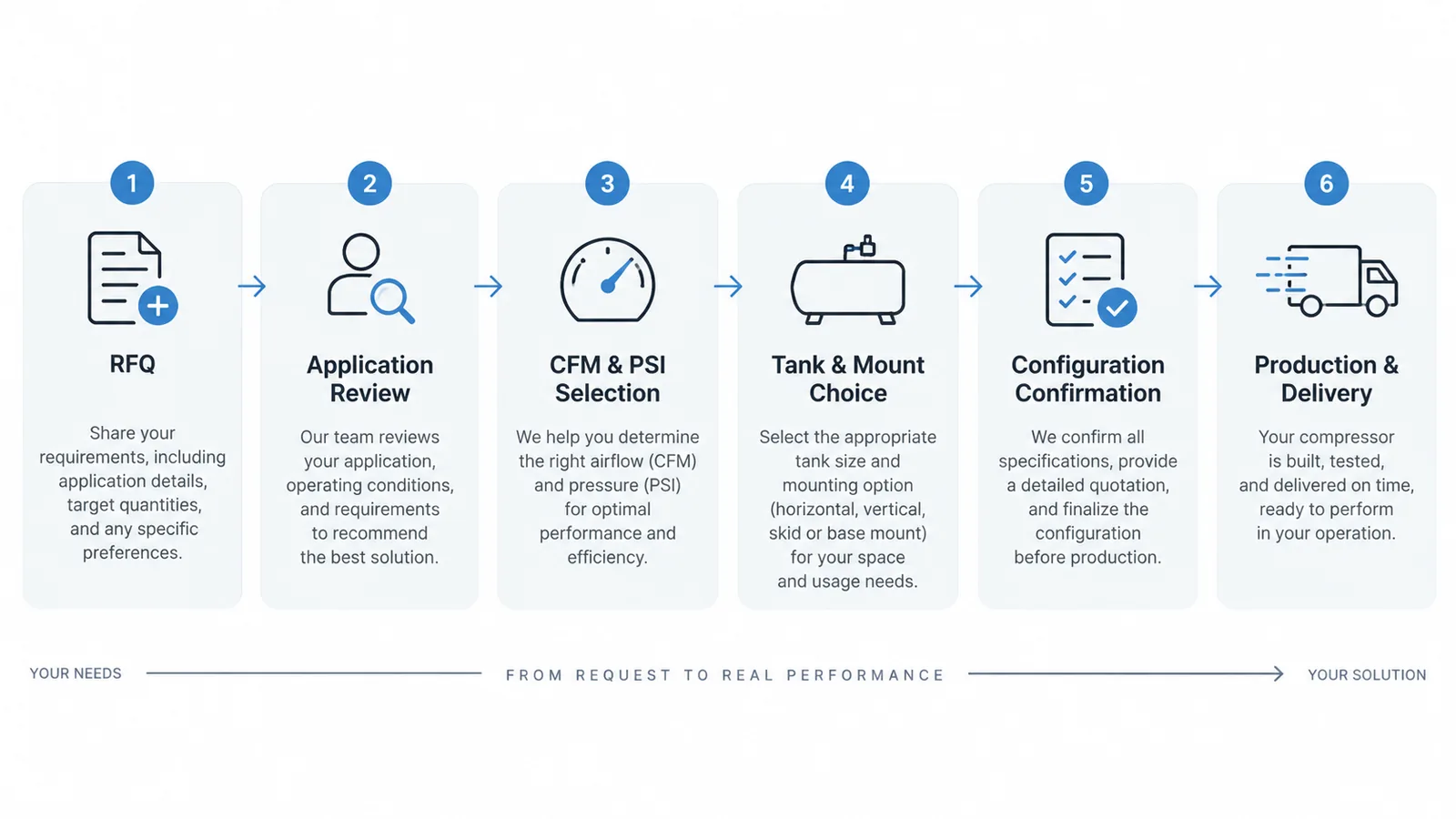
Für ein Angebot oder eine Konfigurationsprüfung benötigen wir folgende Angaben: Werkzeugliste, Annahmen zur gleichzeitigen Nutzung, erforderlicher Druck, Schlauchlänge, Betriebsstunden, Spitzenlastdauer, verfügbare Leistung, Mobilitätsanforderungen, Umgebungsbedingungen, Menge und Bestimmungsort. Ist ein Wert unklar, geben Sie dies bitte an und nennen Sie das Werkzeug, den Prozess oder die vorhandene Maschine, die diese Anforderung verursacht. Dies ist hilfreicher als die Angabe einer willkürlichen Zahl, da der Lieferant so erkennen kann, welche Annahme noch überprüft werden muss. Wird eine bestehende Anlage ersetzt, geben Sie bitte deren Modell, den tatsächlich verwendeten Druck, das beobachtete Lastverhalten und den Grund für den Austausch an.
Definieren Sie im Angebotsangebot (RFQ) den Lieferumfang sowie den Kompressor. Geben Sie an, ob Behälter, Trockner, Filter, Kondensatabscheider, Anlasser oder Steuerung zum angeforderten Paket gehören, und kennzeichnen Sie etwaige Einschränkungen hinsichtlich Abmessungen oder Anschlüssen. Bei Exportprojekten müssen Bestimmungsort und Stromversorgung vor Produktionsbeginn bestätigt werden. Fügen Sie für kritische Anwendungen das erwartete Abnahmeprotokoll bei, damit beide Seiten wissen, wie die gewählte Konfiguration nach der Installation geprüft wird.