
Descripción del Producto
Descripción del Producto
Sistema de refrigeración con radiador de gran tamaño y depósito de expansión.
Chasis de alta resistencia
¡Aislamiento integrado y bloque antivibración!
¡Batería sin mantenimiento!
¡Alternador de CA para cargador de batería!
Cargador de baterías
Cable y soporte para la batería
¡Interruptor de aislamiento de la batería!
¡Interruptor principal!
Sistema de control de arranque automático
¡Separador de combustible y agua!
¡Sensor de nivel de combustible!
¡Bomba de cárter de aceite!
¡Prueba de carga completa!
¡Protección de seguridad integral!
¡Botón de parada de emergencia!
CCW-1250T5 powered by:QSK38-G5
| Características del grupo electrógeno diésel: PF=0,8, trifásico | ||||||||||
| Rendimiento del grupo electrógeno | 50 Hz | |||||||||
| Servicio | PRP | Apoyar | ||||||||
| Potencia nominal | kVA | 1250 | 1375 | |||||||
| Potencia activa de salida | kW | 1000 | 1100 | |||||||
| Velocidad nominal | rpm | 1500 | ||||||||
| Voltaje estándar | V | 400/230 | ||||||||
| Voltaje disponible | V | 380/220 – 415/240 | ||||||||
| Rendimiento del motor principal a 1500 rpm | ||||||||||
| SERVICIO | PRP | Apoyar | ||||||||
| Potencia nominal | KW | 1107 | 1224 | |||||||
| Fabricante | Cummins | |||||||||
| Motor diésel de 4 tiempos – Tipo inyección | Directo | |||||||||
| Tipo de aspiración | Turbocharged&Aftercooled | |||||||||
| Cilindros, número y disposición | 12 -V | |||||||||
| Diámetro × Carrera | mm | 159X159 | ||||||||
| Desplazamiento total | L | 37,7 | ||||||||
| Sistema de refrigeración | Agua | |||||||||
| Certificación de emisiones | U.S. EPA Tier 2 | |||||||||
| Relación de compresión | 15.0:1 | |||||||||
| Consumo específico de combustible (PRP) | L/h | 271 | ||||||||
| Consumo específico de aceite (a plena carga) | % | <0,1 | ||||||||
| Capacidad total de refrigerante | L | 361,7 | ||||||||
| Sistema de combustible | Tipo | Cummins MCRS(Common Rail) | ||||||||
| Generador síncrono GTL | ||||||||||
| Modelo | K1000G4 | |||||||||
| Polos | num | 4 | ||||||||
| Conexiones de bobinado (estándar) | Serie estelar | |||||||||
| Aislamiento | clase | H | ||||||||
| Caja (según IEC-34-5) | IP23 | |||||||||
| Fases | 3+N | |||||||||
| Reguladores de Voto | AVR (PMG MX341) | |||||||||
| Precisión de voltaje constante | dentro de ±1,0% desde carga nula hasta carga completa con cosΦ=0,8-1,0 | |||||||||
| Datos de instalación del generador a 1500 rpm | ||||||||||
| SISTEMA DE ESCAPE | ||||||||||
| Temperatura de los gases de escape a plena carga | ºC | 478 | ||||||||
| °F | 892,4 | |||||||||
| flujo de gases de escape | L/s | 3770 | ||||||||
| Presión de retorno máxima permitida | Kpa | 7 | ||||||||
| REQUISITOS DE AIRE | ||||||||||
| Requerimiento de aire para la combustión a carga/velocidad nominal de 100% | L/s | 1512 | ||||||||
| pies cúbicos/min (CFM) | 3201,9 | |||||||||
| SISTEMA DE ARRANQUE ELÉCTRICO | ||||||||||
| Starting motor output | kw | N / A | ||||||||
| Capacidad mínima recomendada de la batería: prueba en frío a 0 °F (-18 °C) | CCA | 1800 | ||||||||
| Voltaje auxiliar | V | 24 | ||||||||
| SISTEMA DE LUBRICACIÓN | ||||||||||
| Sistema de lubricación, incluyendo cárter, filtros, etc. | L | 170,3 | ||||||||
| Capacidad de arranque en frío | ||||||||||
| Temperatura ambiente mínima para el arranque en frío sin ayuda | °F (°C) | 45(7.2) | ||||||||
Selección Xihu (Lago del Oeste) Dis.
Información de la empresa
HangZhou CZPT Power System Co., Ltd., fundada en 2009, es una empresa profesional de soluciones y suministro de generación de energía ubicada en Hangzhou, China. Nos dedicamos a la investigación, el desarrollo, la producción, la venta y el servicio de generadores diésel industriales, generadores diésel móviles, generadores diésel con bomba, generadores de gas, compresores de aire y torres de iluminación.
Los generadores que suministramos pueden ser de tipo abierto, resistentes a la intemperie e insonorizados, con una potencia que oscila entre 5 kW y 4000 kW;
El generador de gas puede tener una potencia que oscila entre 12 kW y 1500 kW;
La gama de compresores de aire abarca desde 55 CFM hasta 1600 CFM, con una presión máxima de 34,5 bar;
Las torres de iluminación se diseñaron para ofrecer la más amplia gama de opciones, con múltiples soluciones de lámparas, desde proyectores de halogenuros metálicos hasta lámparas LED, para satisfacer diferentes aplicaciones. Además, son totalmente personalizables.
How to Choose the Right Air Compressor
An air compressor uses pressurized air to power a variety of tools. They are most commonly used to power nailers and impact wrenches. Other popular uses for air compressors include paint sprayers and impact wrenches. While all air compressors have the same basic construction, their specialty differs. Ultimately, their differences come down to the amount of air they can push. Read on for information on each type of air compressor. These tools are great for many different purposes, and choosing the right air compressor depends on your specific needs.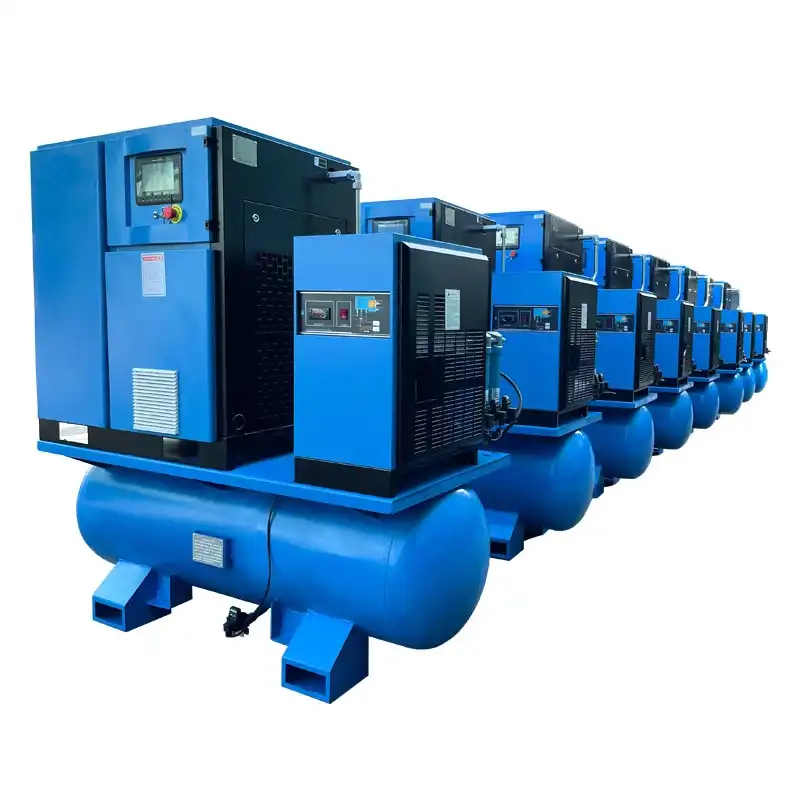
Electric motor
While purchasing an electric motor for air compressor, compatibility is a key factor. Not all motors work with the same type of air compressor, so it’s important to check the manufacturer’s instructions before purchasing. By doing this, you can avoid wasting money on an incompatible motor. Another important consideration is speed. A motor’s speed is its rate of rotation, measured in revolutions per minute. It is critical that you purchase a motor with sufficient speed to meet the needs of your air compressor.
Typically, an electric motor for air compressor is 1.5 hp. It is ideal for use with medical equipment and metal-cutting machines. It also performs well under continuous operation and offers a high efficiency and energy-saving performance. Moreover, it features an attractive price, making it a good choice for a wide range of applications. If you are looking for a motor for an air compressor, look no further than a ZYS series.
A motor’s protection class indicates how the motor will operate. Protection classes are specified by the IEC 60034-5. These are stated with 2 digits and represent the protection against solid objects and water. For example, an IP23 rating means that the motor will be protected from solid objects, while IP54 means that it will protect from dust and water sprayed from all directions. It is vital to choose a motor with the correct protection class for your air compressor.
When choosing an electric motor, you should consider whether it’s compatible with the brand of air compressor. Some may be compatible, while others may require advanced electronics skills to repair. However, most air compressors are covered by warranty, so it’s important to check with the manufacturer if the warranty is still in effect before you spend a dime on a replacement. The motor should be replaced if it has failed to perform as designed.
Oil bath
Air compressors require proper lubrication to function efficiently. The piston must draw air with minimal friction. Depending on their design, air compressors can either be oil-lubricated or oil-free. The former uses oil to reduce piston friction, while the latter splashes it on the cylinder bearings and walls. Such air compressors are commonly known as oil-flooded air compressors. In order to keep their oil baths clean, they are recommended for use in locations with high dust levels.
Start/stop control
An air compressor can be controlled by a start/stop control. This type of control sends a signal to the main motor that activates the compressor when the demand for air falls below a preset limit. This control strategy is effective for smaller air compressors and can be useful for reducing energy costs. Start/stop control is most effective in applications where air pressure does not change frequently and where the compressor is not required to run continuously.
To troubleshoot this problem, you need to check the power supply of your compressor. To check the supply side, use a voltage monitor to determine if power is flowing to the compressor. Ensure that the power supply to the compressor is steady and stable at all times. If it fluctuates, the compressor may not start or stop as expected. If you cannot find the problem with the air compressor power supply, it may be time to replace it.
In addition to the start/stop control, you may want to purchase additional air receivers for your air compressor. These can increase the capacity of air stored and reduce the number of times it starts and stops. Another way to decrease the number of starts per hour is to add more air receivers. Then, you can adjust the control to match your requirements. You can also install a pressure gauge that monitors the compressor’s performance.
Start/stop control for air compressors can be complex, but the basic components are relatively easy to understand. One way to test them is to turn the compressor on or off. It is usually located on the exterior of the motor. If you’re unsure of the location of these components, check the capacitors and make sure that the air compressor is not running while you’re not using it. If it does, try to remove the capacitor.
Variable displacement control is another way to adjust the amount of air flowing into the compressor. By controlling the amount of air, the control can delay the use of additional compressors until more required air is available. In addition to this, the device can also monitor the energy used in the compressor. This control method can result in substantial energy savings. You can even save on the amount of electricity by using variable displacement control. It is essential for efficient compressed air systems.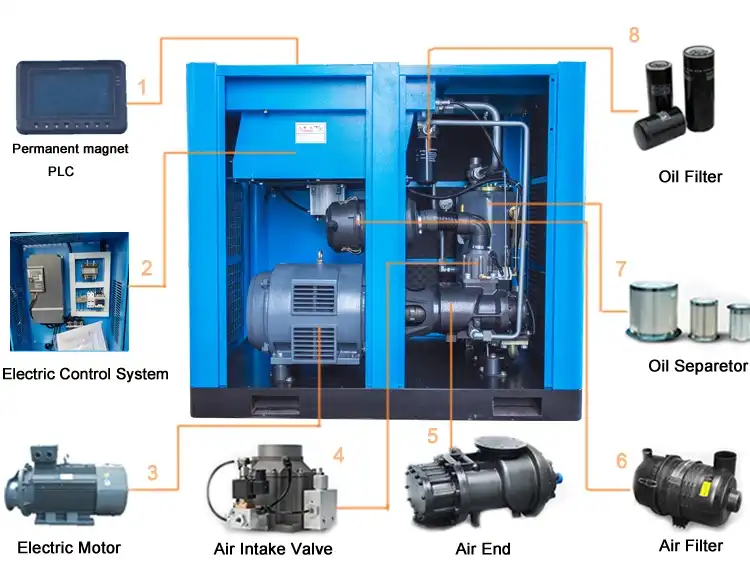
Variable speed drive
A VFD, or variable frequency drive, is a type of electric motor that adjusts its speed to match the demand for air. It is an efficient way to reduce energy costs and improve system reliability. In fact, studies have shown that a 20% reduction in motor speed can save up to 50% of energy. In addition, a VFD can monitor additional variables such as compressor oil pressure and motor temperature. By eliminating manual checks, a VFD will improve the performance of the application and reduce operating costs.
In addition to reducing energy costs, variable-speed drives also increase productivity. A variable-speed air compressor reduces the risk of system leaks by 30 percent. It also reduces the risk of system leaks by reducing pressure in the system. Because of these advantages, many governments are promoting this technology in their industries. Many even offer incentives to help companies upgrade to variable-speed drives. Therefore, the variable-speed drive can benefit many air compressor installations.
One major benefit of a variable-speed drive is its ability to optimize energy use. Variable frequency drives are able to ramp up and down to match the demand for air. The goal is to optimize the pressure and flow in the system so that the best “dead band” occurs between 40 percent and 80 percent of full load. A variable-speed compressor will also increase energy efficiency because of its programmability.
A variable-speed air compressor can also be used to control the amount of air that is compressed by the system. This feature adjusts the frequency of power supplied to the motor based on the demand. If the demand for air is low, the frequency of the motor will reduce to save energy. On the other hand, if there is an excess demand for air, the variable-speed compressor will increase its speed. In addition, this type of air compressor is more efficient than its fixed-speed counterpart.
A VFD has many benefits for compressed air systems. First, it helps stabilize the pressure in the pipe network, thereby reducing the power losses due to upstream pressure. It also helps reduce the power consumption caused by fluctuations in upward pressure. Its benefits are also far-reaching. And as long as the air pressure and air supply is properly sized, a VFD will help optimize the efficiency of compressed air systems.

