
Descrizione del prodotto
Air Dryer / Combined air dryer / Air cooled refrigerated combined air dryer compressor for sale
Foto dettagliate
(1) Air-cooled combined dryer
Technological Process of the Combined Low Dew Point Compressed Air Dryer
| Symbol | Name | Symbol | Name |
| 1 | Refrigerant Compressor | 15 | Air Pressure Gauge |
| 2 | Oil Separator | 16 | Heat Exchanger |
| 3 | Condenser | 17 | Pressure Relief Valve |
| 4 | Dryer Filter | 18,19 | Check Valve |
| 5 | Sight Lens | 20,21 | Check Valve(Heat Type) |
| 6 | Bulge Thermal Expansion Valve | 22,23,24,25 | Pneumatic Valve |
| 7 | Hot Gas Bypass Valve | 26,29,30,33 | Diffuser |
| 8 | Vaporizer | 27,31 | Air Pressure Gauge |
| 9 | Humidity Sensor | 28,32 | Adsorption Vessel |
| 10 | Evaporator | 34,35,36,37 | Pilot Solenoid Valve |
| 11 | Refrigerant Low Pressure Gauge |
38 | Muffler |
| 12 | Refrigerant Low Pressure Gauge |
39 | Flow Regulating Valve(Heatless Type) |
| 13 | High and Low Pressure Controller | 40 | Throttling Orifice Plate(Heat Type) |
| 14 | Gas Liquid Separator | 41 | Electical Heater(Heat Type) |
General Introduction:
Commonly, there are 2 kinds of compressed air dryer: refrigerated compressed air dryer and regeneration adsorption one. The refrigerated compressed air dryer is quite energy-saving without any air loss, While it is limited by the dew point temperature. The regeneration adsorption compressed air dryer can reach a quiet low dew point, but it has the shortcoming of big air loss and high energy consumption.
The CZPT combined low dew point compressed air dryer takes the maximum advantages of the above 2 kinds of dryers through reasonable pipeline connection and capacity matching, which ensure its economic operation and high quality of low dew point finished air.
Operating Principle:
Firstly, the hot and wet compressed air from the compressor is heat exchange with dried cold compressed air in the heat exchanger. Then it will be cooled down to about 2ºC by evaporator. Under this pressure dew point, the majority of vapor water in the compressed air is eliminated and discharged. After these processes, the low temperature air goes into the heat exchanger to cool the high wet compressed air, at the same time, itself temperature goes up in order to prevent the condensation of dew on the surface of pipelines. Last, low moisture compressed air dryer goes into the adsorption vessel to be further dried in order to get the good dew point.
(2) Water-Cooled Combined Type Air Dryer
Working condition and technical data
Maximum inlet air temperature:45ºC
Ambient temperature range:5-50ºC
Pressure range:0.6-1.0Mpa
Pressure dew point:-20ºC ~ -40ºC
Regeneration gas consumption:3-5%
Cooling mode: water cooling (industrial circulating cooling water)
Cooling water pressure range: 0.2-0.4mpa
Maximum cooling water inlet temperature: 38 ºC
Intake oil content: ≤ 0.1ppm
Power supply: 6-12nm 3 / min: AC 220 V / 50 Hz
15nm3 / min and above: AC 380V / 220V / 50Hz
Cycle: T = 40 (min)
Refrigerant: R22 (R407C / R134a optional)
Design condition: inlet temperature: 38 ºC
Ambient temperature: 38 ºC
Working pressure: 0.7MPa
Cooling water inlet temperature: 32 ºC
Pressure loss: ≤ 5% of design pressure
Note: the water-cooled equipment above 80 cubic CZPT are split bare machines. Other special requirements are welcome to customize.
Product features
- Low dew point:The combined low dew point dryer can reach very low pressure dew point, which can reach below – 40 ºC in general, and – 70 ºC at least according to different user requirements;
- Low energy consumption: the regeneration gas consumption of combined low dew point dryer is only 3% – 5%, which greatly saves the compressed air consumption;
- It can provide compressed air with different dew points for different air consumption points;
- All the operation switches and display instruments of the combined low dew point compressed air dryer are concentrated on the panel of the box plate. The refrigeration type compressed air dryer and the adsorption regeneration compressed air dryer can operate independently or simultaneously with cold and suction according to the customer’s needs;
- The gas-liquid separator adopts the patented three-stage separation mode: direct collision separation + low-speed centrifugal separation + stainless steel wire mesh demisting separation. 99.9% of liquid water is separated from the cooled compressed air. The second evaporation of textile moisture can ensure the low dew point quality of finished gas.
- High quality switching valve, stable and reliable, can ensure the integrity of the working process and prolong the working life of components.
- The refrigeration compressor adopts CZPT of Denmark, CZPT of ZheJiang , CZPT of Japan, CZPT of Germany, CZPT of Germany, CZPT of France and other companies of fully closed or semi closed refrigeration compressor, which has stable operation, low noise, high cop, reliable performance and long power saving life;
Parametri del prodotto
(1) Air-Cooled Combined Type Air Dryer specification
|
Modello |
Capacità d'aria (Nm3/min) |
Desiccant weight(kg) | Air connector dia | Refrigerant power (HP) |
flusso d'aria (Nm3/h) |
Fan power(W) | Voltaggio (V) |
Dryer Net Weight (kg) |
Length(mm) | Wideth(mm) | Height(mm) |
| SDZF-1 | 1.2 | 25 | G1″ | 1/2 | 745 | 1×50 | 220 | 400 | 1080 | 850 | 1460 |
| SDZF-2 | 2.5 | 40 | G1″ | 1/2 | 745 | 1×50 | 220 | 440 | 1100 | 900 | 2050 |
| SDZF-3 | 3.6 | 60 | G1″ | 3/4 | 1330 | 1×100 | 220 | 460 | 1200 | 1000 | 1808 |
| SDZF-4.5 | 5 | 85 | G1 1/2″ | 1 | 2670 | 1×135 | 220 | 660 | 1290 | 1030 | 2263 |
| SDZF-6 | 6.8 | 105 | G1 1/2″ | 1.5 | 4500 | 1×230 | 220 | 775 | 1500 | 1105 | 1931 |
| SDZF-8 | 8.5 | 150 | G2″ | 2 | 5340 | 2×135 | 220 | 970 | 1500 | 1240 | 2016 |
| SDZF-10 | 10.9 | 185 | G2″ | 2.5 | 5340 | 2×135 | 220 | 1120 | 1500 | 1240 | 2316 |
| SDZF-12 | 12.8 | 185 | G2″ | 2.5 | 5340 | 2×135 | 220 | 1120 | 1500 | 1240 | 2316 |
| SDZF-15 | 16 | 310 | DN65 | 3 | 7600 | 2×190 | 380/220 | 1700 | 1960 | 1450 | 2342 |
| SDZF-20 | 22 | 395 | DN65 | 4 | 7600 | 2×190 | 380/220 | 1800 | 1980 | 1600 | 2408 |
| SDZF-25 | 26.8 | 492 | DN80 | 5 | 9000 | 2×230 | 380/220 | 2100 | 2270 | 1700 | 2460 |
| SDZF-30 | 32 | 600 | DN80 | 6 | 9000 | 2×230 | 380/220 | 2300 | 2420 | 1780 | 2506 |
| SDZF-40 | 43.5 | 725 | DN100 | 7 | 12500 | 2×420 | 380/220 | 2700 | 2100 | 2340 | 2673 |
| SDZF-50 | 53 | 855 | DN100 | 10 | 13500 | 3×230 | 380/220 | 2900 | 2100 | 2390 | 2687 |
| SDZF-60 | 67 | 1005 | DN125 | 12 | 18750 | 3×420 | 380/220 | 3350 | 2250 | 2600 | 2814 |
| SDZF-80 | 90 | 1335 | DN125 | 13.3 | 25000 | 4×420 | 380/220 | 4200 | 2640 | 2600 | 2866 |
Note:Design conditions: working pressure: 7bar, inlet temperature: 38ºC, pressure dew point: -20ºC
(2) Water-Cooled Combined Type Air Dryer
Product specifications
| modello | Capacità d'aria (Nm3/min) |
Weight of desiccant(kg) | Air nozzle diameter | Diameter of cooling water pipe | Cooling power (HP) |
Cooling water flow (Nm³/h) |
Voltaggio (V) |
Equipment weight (kg) |
L(mm) | W(mm) | Hmm) |
| SDZW-6 | 6.8 | 105 | G1 1/2″ | R1″ | 1.5 | 1.2 | 220 | 760 | 1500 | 1160 | 1940 |
| SDZW-8 | 8.5 | 150 | G2″ | R1″ | 2 | 1.2 | 220 | 960 | 1500 | 1100 | 2016 |
| SDZW-10 | 10.9 | 185 | G2″ | R1″ | 2.5 | 1.6 | 220 | 1120 | 1500 | 1240 | 2316 |
| SDZW-12 | 12.8 | 185 | G2″ | R1″ | 2.5 | 1.8 | 220 | 1150 | 1500 | 1240 | 2316 |
| SDZW-15 | 16 | 275 | DN65 | R1″ | 3 | 2 | 380/220 | 1660 | 1960 | 1450 | 2196 |
| SDZW-20 | 22 | 395 | DN65 | R1 1/2″ | 4 | 3 | 380/220 | 1740 | 1970 | 1600 | 2475 |
| SDZW-25 | 26.8 | 495 | DN80 | R1 1/2″ | 5 | 3.6 | 380/220 | 2075 | 2030 | 1630 | 2505 |
| SDZW-30 | 32 | 605 | DN80 | R1 1/2″ | 6 | 4.6 | 380/220 | 2200 | 2240 | 1840 | 2519 |
| SDZW-40 | 43.5 | 725 | DN100 | R1 1/2″ | 7 | 5.6 | 380/220 | 2784 | 2360 | 1900 | 2637 |
| SDZW-50 | 53 | 860 | DN100 | R1 1/2″ | 10 | 7.2 | 380/220 | 3144 | 2400 | 2000 | 2638 |
| SDZW-60 | 67 | 1005 | DN125 | R1 1/2″ | 12 | 9.2 | 380/220 | 3361 | 2540 | 2100 | 2719 |
| SDZW-80 | 90 | 1335 | DN125 | R1 1/2″ | 13.3 | 10.8 | 380/220 | 4500 | 2640 | 2450 | 2818 |
| SDZW-100 | 110 | 2155 | DN150 | R1 1/2″ | 20 | 12.4 | 380/220 | 6550 | 2680 | 2670 | 2985 |
| SDZW-120 | 130 | 2650 | DN150 | R2″ | 25 | 14.6 | 380/220 | 7810 | 2820 | 2800 | 3041 |
| SDZW-150 | 160 | 3205 | DN200 | R2″ | 25 | 16.2 | 380/220 | 8500 | 3290 | 3130 | 3190 |
| SDZW-200 | 210 | 3825 | DN200 | R2 1/2″ | 40 | 18.6 | 380/220 | 9600 | 3350 | 3375 | 3309 |
| SDZW-250 | 260 | 5260 | DN250 | R2 1/2″ | 60 | 24.4 | 380/220 | Detailed parameters and consultation with manufacturers | |||
| SDZW-300 | 315 | 6160 | DN250 | R3″ | 70 | 30.5 | 380/220 | Detailed parameters and consultation with manufacturers | |||
Optional Accessories
- Micro heat type
- Dew point display
- Dew point energy saving control
- Special voltage
- Environmental refrigerant
- – 70 ºC dew point
- Not limited to this
Profilo Aziendale
Certificazioni
Imballaggio e spedizione
FAQ
| Servizio post-vendita: | Ok |
|---|---|
| Garanzia: | 1 anno |
| Flow: | Cross Flow |
| Material Status: | Bulk |
| Drying Medium: | Air |
| Structure: | All Kinds |
| Esempi: |
US$ 1000/Set
1 set (ordine minimo) | |
|---|
| Personalizzazione: |
Disponibile
|
|
|---|
Tipi di compressori d'aria
There are many types of Air Compressors available on the market. Learn which one is right for your needs and what makes one better than another. Find out more about Single-stage models, Oil-free models, and Low-noise models. This article will explain these types and help you decide which one you need. You can also learn about Air Compressors that have single-stage compressors. If you are looking for a high-quality compressor, this article will help you choose a unit.
Compressori d'aria
Air compressors work by forcing atmospheric air through an inlet valve. As the piston moves down, it pulls atmospheric air into the chamber. As the piston rises, it forces the compressed air out of the cylinder through an exhaust valve. One of the most common types of air compressor is the reciprocating type. Another type of compressor is a single-stage piston. These types of compressors compress air in one stroke – equivalent to the complete rotation of the piston’s crankshaft.
Questi dispositivi trasformano l'energia elettrica o meccanica in aria compressa. Quando l'aria viene compressa, il suo volume diminuisce, aumentandone la pressione. I compressori d'aria hanno in genere una pressione minima di 30 bar. La fascia di pressione inferiore rappresenta l'intervallo di pressione dell'aria. La maggior parte dei compressori è controllata singolarmente, ma è possibile utilizzare sistemi di controllo di rete per interconnettere più compressori. Questo tipo di controller non è adatto a tutti i tipi di compressori. Esistono anche altri tipi di compressori d'aria in grado di comunicare tra loro.
L'aria compressa trova molteplici applicazioni in svariati settori industriali. In agricoltura, può alimentare macchine pneumatiche per la movimentazione dei materiali, utilizzate per l'irrigazione e l'irrorazione delle colture. Anche le attrezzature per l'industria lattiero-casearia utilizzano aria compressa. I compressori sono impiegati anche nell'industria farmaceutica per serbatoi di miscelazione, confezionamento e sistemi di trasporto. I compressori d'aria portatili, che possono essere alimentati a gasolio, sono spesso utilizzati nei siti di perforazione remoti. Sono inoltre comunemente impiegati nell'industria petrolifera e del gas, per il controllo remoto delle valvole e l'installazione delle barre di reazione.
Che si utilizzi un compressore d'aria per scopi agricoli o in un contesto produttivo, ci sono alcune caratteristiche da considerare nella scelta del compressore più adatto alle proprie esigenze. Un buon compressore sarà dotato di un dispositivo di sicurezza che interromperà automaticamente l'afflusso e lo scarico dell'aria una volta raggiunta la compressione desiderata. Queste caratteristiche contribuiranno a mantenere efficiente il compressore e a proteggere le apparecchiature. Il dispositivo di sicurezza è una caratteristica fondamentale di qualsiasi compressore d'aria per aumentarne l'efficienza complessiva.
Vane air compressors are the most common type. They are generally smaller and less powerful than reciprocating piston compressors, so you can use one of these for applications that are under 100 horsepower. The vane air compressors have low compression ratios and high capacities, but they are generally limited to low-power applications. Vane compressors tend to run hot, and they typically have a low compression ratio. It is important to choose the correct oil viscosity for your compressor.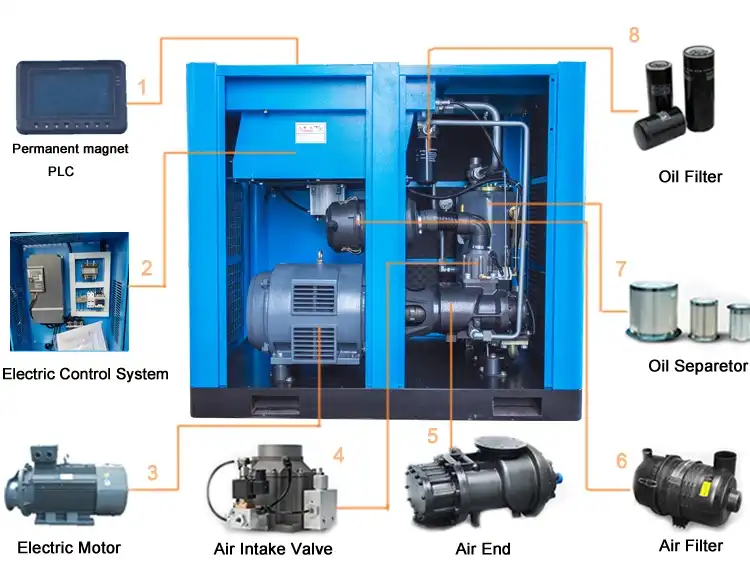
Modelli monostadio
When comparing single-stage air compressors, look for the term “stages.” Multi-stage compressors use two stages and can handle more capacity and pressure. One stage involves pressurizing air using a piston and a lower-pressure cylinder. This compressed air is then moved to a storage tank. Single-stage models tend to be more energy-efficient than their two-stage counterparts. But if you don’t need a high-pressure cylinder, a single-stage air compressor can be the best choice.
Sebbene i compressori d'aria monostadio producano meno potenza, possono comunque generare aria a sufficienza per alimentare utensili pneumatici e altre apparecchiature pneumatiche. Queste unità monostadio sono particolarmente utili per piccoli progetti domestici e lavori fai-da-te. Per usi più industriali, un modello a doppio stadio è la scelta migliore. Tuttavia, se avete fretta, un'unità monostadio potrebbe essere sufficiente. In definitiva, dipende dall'uso che intendete fare del compressore d'aria.
Single-stage air compressors feature a single cylinder, one piston stroke for each revolution of pressurized air. Single-stage compressors are typically smaller and more compact, making them a good choice for smaller work environments. Their cfm capacity (cubic feet per minute) is an important indicator of operating capacity. If you plan to use multiple pneumatic tools, you will probably need a higher cfm model. Similarly, the horsepower of single-stage compressors indicates its working capacity. One horsepower moves 550 pounds per foot per minute.
I compressori d'aria multistadio sono generalmente più costosi e più efficienti dal punto di vista energetico rispetto alle unità monostadio, ma possono offrire portate d'aria maggiori. Sebbene possano essere più complessi, possono ridurre i costi operativi complessivi. Se si prevede di utilizzare il compressore d'aria per scopi industriali o commerciali, un modello a doppio stadio potrebbe essere la scelta migliore. Tuttavia, se si intende utilizzare il compressore d'aria per la produzione di massa, un modello monostadio potrebbe essere la soluzione più adatta.
Single-stage air compressors have the same piston size and number of inlets, while dual-stage models have a smaller first piston and a much longer second piston. Both have a cooling tube in between the two pistons to reduce the air temperature before the second round of compression. The single-stage model is typically small and portable, while the double-stage air compressor is stationary. These compressors can both be stationary and large.
Modelli a basso rumore
Nonostante il nome, i compressori d'aria a bassa rumorosità non sono tutti uguali. Il livello di rumore di un compressore può essere influenzato da diversi fattori, tra cui la fonte di alimentazione e la vicinanza alla macchina. I compressori a pistoni sono generalmente più rumorosi di quelli elettrici a causa delle numerose parti in movimento. Al contrario, i compressori a vite e a spirale hanno meno parti in movimento e sono più silenziosi.
Il livello di rumorosità di un compressore d'aria a gas può essere estremamente elevato, rendendolo inadatto all'uso in ambienti chiusi. Per ovviare a questo problema, è possibile optare per un modello elettrico. Il rumore di un compressore è causato principalmente dall'attrito del motore. Anche la copertura del pistone è un fattore importante che incide sul rumore, poiché i pistoni con una copertura minima producono molto rumore. In passato, per un compressore silenzioso era necessario l'olio. Tuttavia, questa situazione è cambiata grazie alla richiesta, da parte del settore medicale, di modelli senza olio.
The CZPT EC28M Quiet Air Compressor is another model that features quiet operation. This air compressor makes 59dB of noise. This level is low enough to allow you to carry on normal conversations while it cycles. In addition, this compressor has an industrial oil-free pump and a 2.8 Amp direct-drive induction motor. These two features make it a great choice for businesses.
Per il settore edile sono disponibili modelli di compressori d'aria a bassa rumorosità. Tuttavia, questi compressori non sono necessariamente di bassa qualità, motivo per cui è importante valutare il livello di rumorosità del proprio utensile pneumatico prima dell'acquisto. Gli specialisti di CZPT possono consigliare i modelli a bassa rumorosità più adatti alle vostre specifiche esigenze e allo spazio di lavoro. Il rumore può infatti disturbare chi lavora nelle vicinanze del compressore d'aria. Per questo motivo, molte aziende optano ormai per questi modelli.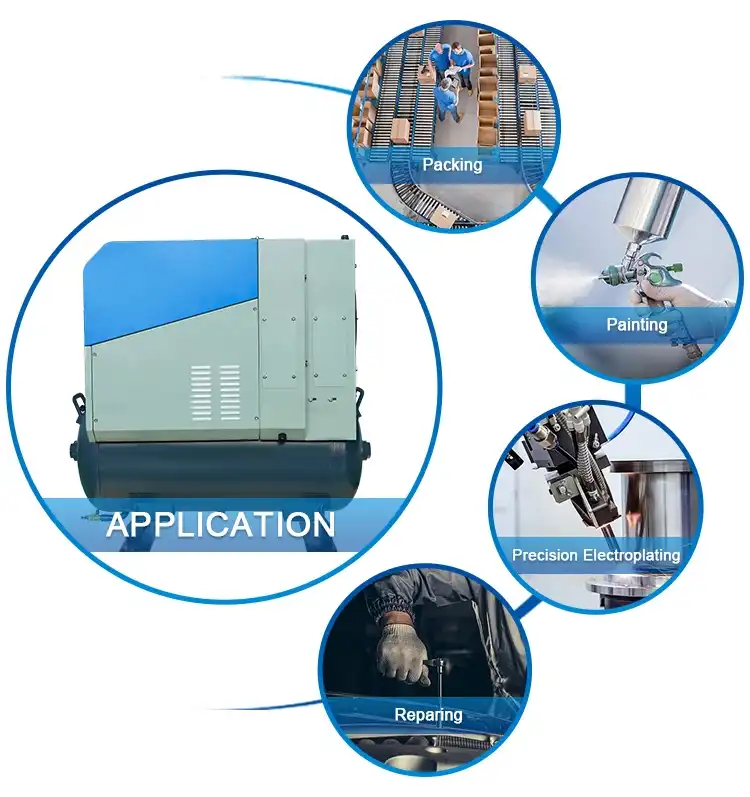
modelli senza olio
Sono disponibili diversi modelli di compressori d'aria senza olio, ma cosa li rende speciali? I compressori senza olio non contengono olio, quindi vengono lubrificati con grasso. Sono una buona scelta se si lavora con un compressore di piccole dimensioni e non si vuole rischiare di danneggiarlo. D'altra parte, i modelli senza olio generano una notevole quantità di calore, che può danneggiare il compressore. L'alta pressione può causare l'attrito del compressore con se stesso o addirittura deformarlo.
Alcune nozioni di base possono aiutarti a scegliere il compressore d'aria oil-free più adatto alle tue esigenze. Ad esempio, la potenza in cavalli (horsepower) di un compressore indica la potenza del motore. Una potenza maggiore corrisponde a una pressione in PSI o a una portata d'aria in ACFM più elevate. Puoi anche utilizzare l'unità di misura ACFM per confrontare i due valori. La tecnologia scroll è un moderno sistema di compressione dell'aria che utilizza una spirale fissa e una mobile. Questo riduce il volume d'aria all'interno del compressore convogliandola verso il centro.
Acquistare un compressore d'aria senza olio non deve essere un'impresa ardua. Un buon distributore può consigliarvi sul tipo di compressore d'aria senza olio più adatto alle vostre esigenze. In questo modo, potrete risparmiare e utilizzare il vostro compressore in tutta tranquillità. E, naturalmente, il modo migliore per ottenere un ottimo prezzo è rivolgersi a un distributore esperto dei prodotti disponibili.
Un compressore d'aria senza olio è un'ottima soluzione per le aziende che sono sensibili alla contaminazione dell'aria. Ad esempio, nell'industria farmaceutica e alimentare, anche una minima quantità di olio potrebbe rovinare un prodotto o addirittura danneggiare le apparecchiature di produzione. I compressori d'aria senza olio hanno generalmente costi di manutenzione inferiori rispetto ai modelli con lubrificazione a olio, poiché presentano un minor numero di parti in movimento. Per questo motivo, i compressori d'aria senza olio richiedono meno manutenzione e potrebbero comunque necessitare di una sostituzione occasionale.
A few advantages of an oil-free air compressor over an oil-lubricated one include lower noise levels. Oil-free air compressors tend to be less noisy and run more quietly than oil-injected ones, but you should still carefully weigh the pros and cons before making a decision. Also, consider how much you use your air compressor before choosing a model. The pros outweigh the cons. In the end, you’ll be glad you chose an oil-free air compressor.


editor by CX 2023-04-22