
Descrição do produto
The Four Seasons General Type Hybrid Solar Power Air Conditioner
Detalhes do produto
Quando a energia é ligada, o compressor começa a funcionar, comprimindo o fluido refrigerante de baixa pressão para alta pressão e de baixa temperatura para alta temperatura, descarregando-o em seguida no trocador de calor do coletor solar.
Durante o dia, o tubo de vácuo absorve a luz solar para aquecer a água do reservatório. Em seguida, a água quente transfere o calor para o fluido refrigerante através do trocador de calor, que por sua vez auxilia o compressor a elevar a temperatura e aumentar a pressão do fluido refrigerante. Dessa forma, basta um compressor de menor capacidade para o sistema funcionar, consumindo menos energia para aquecer ou resfriar o ambiente e, consequentemente, economizando energia.
O ar-condicionado solar híbrido é alimentado por eletricidade e utiliza energia solar como fonte auxiliar. Os dois tipos de energia funcionam de forma complementar, de acordo com os princípios da dinâmica dos fluidos. Ele combina o sistema de absorção com o sistema de compressão, utilizando fluidos ecológicos para refrigeração e aquecimento, com base na tecnologia tradicional de ar-condicionado, visando economia de energia e proteção ambiental.
Apresentação do produto
(9000 BTU - 24000 BTU) para fogões de parede. Até 48000 BTU para as séries Cassete, Duto, Piso e Piso-teto.
- Conectado à rede elétrica com energia solar 50%
- Classificação de altíssima eficiência, atingindo 4,0.
3. Design moderno e elegante, visor LED, funcionamento silencioso.
4. Coletor solar de tubo térmico a vácuo, com fácil instalação e custo acessível.
5. Compressor CZPT
6. Trocador de calor com revestimento azul (Melhor efeito de transferência de calor)
Tubos de conexão de cobre 7.100% com isolamento
8. Gás ecológico R410A
Parâmetros do produto
| Freon:R410 | ||||||
| Fonte de alimentação: 220-240 VCA, monofásico, 50/60 Hz | ||||||
| Desempenho | ||||||
| Capacidade | Resfriamento | Btu/h | 9000 BTU | 11500 BTU | 12000 BTU | 18000 BTU |
| C | 2600 | 3200 | 3500 | 5200 | ||
| Aquecimento | Btu/h | 10000 | 12000 | 13000 | 20000 | |
| C | 2900 | 3500 | 3800 | 6000 | ||
| Barulho | Interior | dB(A) | ≤40 | ≤42 | ≤42 | ≤44 |
| Ar livre | dB(A) | ≤50 | ≤52 | ≤52 | ≤54 | |
| Circulação de ar | m³/h | 500 | 520 | 550 | 800 | |
| Área adequada | m² | 11~17 | 13~21 | 15~23 | 26~36 | |
| EER | W/W | 3.84 | 3.72 | 3.89 | 3.83 | |
| Btu/h/w | 12.42 | 12.69 | 13.27 | 13.07 | ||
| Consumo de energia | ||||||
| Entrada de energia | Resfriamento | C | 650~770 | 780~940 | 800~1571 | 1100~1300 |
| Aquecimento | C | 650~780 | 780~950 | 800~1050 | 1150~1350 | |
| Corrente nominal | Resfriamento | UM | 3.00~3.60 | 3.55~4.27 | 3.70~4.80 | 6.30~7.30 |
| Aquecimento | UM | 3.00~3.65 | 3.55~4.31 | 3.70~4.90 | 6.30~7.50 | |
| Tubo de vácuo | Diâmetro*Comprimento*Peças | 47*520*10 | 47*520*10 | 47*520*10 | 47*620*11 | |
| Coletor solar de placa plana | WXDXH | 1000x550x90 | 1000x550x90 | 1000x550x90 | 1000x550x90 | |
| Dimensões | ||||||
| Unidade interna | Líquido | mm | 775*265*210 | 775×265×210 | 775×265×210 | 985×300×220 |
| Envio | mm | 840*325*265 | 840×325×265 | 840×325×265 | 1080×380×300 | |
| Unidade externa | Líquido | mm | 790*260*540 | 790*260*540 | 790*260*540 | 850*300*755 |
| Envio | mm | 910*370*610 | 910*370*610 | 910*370*610 | 950*410*760 | |
| Reservatório de água | Envio | mm | 910*400*330 | 910*400*330 | 910*400*330 | 980*400*370 |
| Tubo de vácuo | Envio | mm | ||||
| Coletor solar de placa plana | Envio | mm | 1100x650x110 | 1100x650x110 | 1100x650x110 | 1100x650x110 |
| Peso | ||||||
| Unidade interna | Líquido/Bruto | kg | 9/10.5 | 10/11.5 | 10/11.5 | 16/17.5 |
| Unidade externa | Líquido/Bruto | kg | 31/34 | 36/38 | 38/40 | 50/52 |
| Coletor solar | Líquido/Bruto | kg | 13/15 | 13/15 | 13/15 | 16/17 |
| Quantidade de carregamento | em 20 pés | conjuntos | 75 | 75 | 75 | 55 |
| 40HQ | conjuntos | 175 | 175 | 175 | 125 | |
| Freon:R410 | |||||
| Fonte de alimentação: 220-240 VCA, monofásico, 50/60 Hz | |||||
| Desempenho | |||||
| Capacidade | Resfriamento | Btu/h | 20000 BTU | 24000 BTU | 36000 BTU |
| C | 6000 | 7200 | 10000 | ||
| Aquecimento | Btu/h | 22000 | 27000 | 40000 | |
| C | 6600 | 7900 | 11000 | ||
| Barulho | Interior | dB(A) | ≤46 | ≤50 | ≤52 |
| Ar livre | dB(A) | ≤56 | ≤58 | ≤60 | |
| Circulação de ar | m³/h | 850 | 1150 | 1350 | |
| Área adequada | m² | 25~42 | 30~48 | 40~60 | |
| EER | W/W | 3.88 | 3.82 | 3.82 | |
| Btu/h/w | 13.24 | 13.03 | 13.03 | ||
| Consumo de energia | |||||
| Entrada de energia | Resfriamento | C | 1350~1560 | 1700~1900 | 2400~2640 |
| Aquecimento | C | 1350~1590 | 1700~1950 | 2470~2650 | |
| Corrente nominal | Resfriamento | UM | 6.30~7.30 | 8.00~8.90 | 10.91~11.95 |
| Aquecimento | UM | 6.30~7.50 | 8.00~8.90 | 11.23~12.05 | |
| Tubo de vácuo | Diâmetro*Comprimento*Peças | 47*620*11 | 47*620*11 | 47*620*11 | |
| Coletor solar de placa plana | WXDXH | 1000x550x90 | 1000x550x90 | 900x500x80 | |
| Dimensões | |||||
| Unidade interna | Líquido | mm | 985×300×220 | 985×300×220 | 1080×320×240 |
| Envio | mm | 1080×380×300 | 1080×380×300 | 1150×420×320 | |
| Unidade externa | Líquido | mm | 850*300*755 | 850*300*755 | 865*310*710 |
| Envio | mm | 950*410*760 | 950*410*760 | 1571*395*790 | |
| Reservatório de água | Envio | mm | 980*400*370 | 980*400*370 | 980*400*370 |
| Tubo de vácuo | Envio | mm | |||
| Coletor solar de placa plana | Envio | mm | 1100x650x110 | 1100x650x110 | 950x550x90mm |
| Peso | |||||
| Unidade interna | Líquido/Bruto | kg | 16/17.5 | 20/22 | 23/25 |
| Unidade externa | Líquido/Bruto | kg | 50/52 | 55/58 | 65/70 |
| Coletor solar | Líquido/Bruto | kg | 16/17 | 16/17 | 16/17 |
| Quantidade de carregamento | em 20 pés | conjuntos | 55 | 55 | 50 |
| 40HQ | conjuntos | 125 | 125 | 115 | |
Mostrar detalhes do produto:
Projetos de ar condicionado solar:
Processamento de Produtos
Embalagem do produto
Produtos populares
Por que nos escolher?
1. Responderemos à sua solicitação em 24 horas.
2. Retorno da reclamação em 24 horas.
3. OEM/ODM são aceitos.
4. Agentes exclusivos no país local são bem-vindos.
5. Fornecer aconselhamento técnico profissional
6. A Supergreen Tech Co., Ltd. é uma fabricante profissional de produtos solares, como lâmpadas solares, condicionadores de ar solares, refrigeradores solares, lâmpadas solares para controle de pragas e outros.
Com certificação CE e diversas tecnologias patenteadas, garantimos que podemos fornecer a todos os nossos clientes os melhores produtos, fáceis de usar!
PERGUNTAS FREQUENTES:
P1. Posso solicitar uma amostra de ar condicionado solar?
Sim, aceitamos pedidos de amostra para teste e verificação de qualidade. Amostras mistas são aceitáveis.
Q2. E quanto ao prazo de entrega?
A produção de amostras leva de 7 a 20 dias, e a produção em massa, de 3 a 6 semanas.
P3. Existe alguma quantidade mínima de pedido para condicionadores de ar?
Baixa quantidade mínima de encomenda, 1 unidade para verificação de amostra disponível.
Q4. Como vocês enviam as mercadorias e quanto tempo leva para chegar?
Geralmente enviamos por via marítima. Normalmente leva de 1 a 2 meses.
Q5. Como faço para encomendar um ar condicionado solar?
Primeiramente, informe-nos sobre suas necessidades ou sua aplicação.
Em segundo lugar, apresentamos um orçamento de acordo com as suas necessidades ou com as nossas sugestões.
Em terceiro lugar, o cliente confirma as amostras e efetua o depósito para o pedido formal.
Em quarto lugar, organizamos a produção.
Q6. Posso imprimir meu logotipo em um produto de ar condicionado?
Sim. Por favor, informe-nos formalmente antes da produção e confirme o design com base em nossa amostra.
Q7: Vocês oferecem garantia para os produtos?
Sim, oferecemos garantia de 2 a 5 anos para nossos produtos.
Q8: Como lidar com os defeituosos?
Em primeiro lugar, nossos produtos são fabricados sob um rigoroso sistema de controle de qualidade e a taxa de defeitos será inferior a 0,2%.
Em segundo lugar, durante o período de garantia, iremos reparar os produtos e reenviá-los para você ou fornecer as peças novas para substituição e enviá-las em novos contêineres. Podemos também discutir a solução, incluindo um novo recall, de acordo com a situação real.
Seja bem-vindo(a) à nossa equipe!
superverdesolar
Types of Air Compressors
There are many types of Air Compressors available on the market. Learn which 1 is right for your needs and what makes 1 better than another. Find out more about Single-stage models, Oil-free models, and Low-noise models. This article will explain these types and help you decide which 1 you need. You can also learn about Air Compressors that have single-stage compressors. If you are looking for a high-quality compressor, this article will help you choose a unit.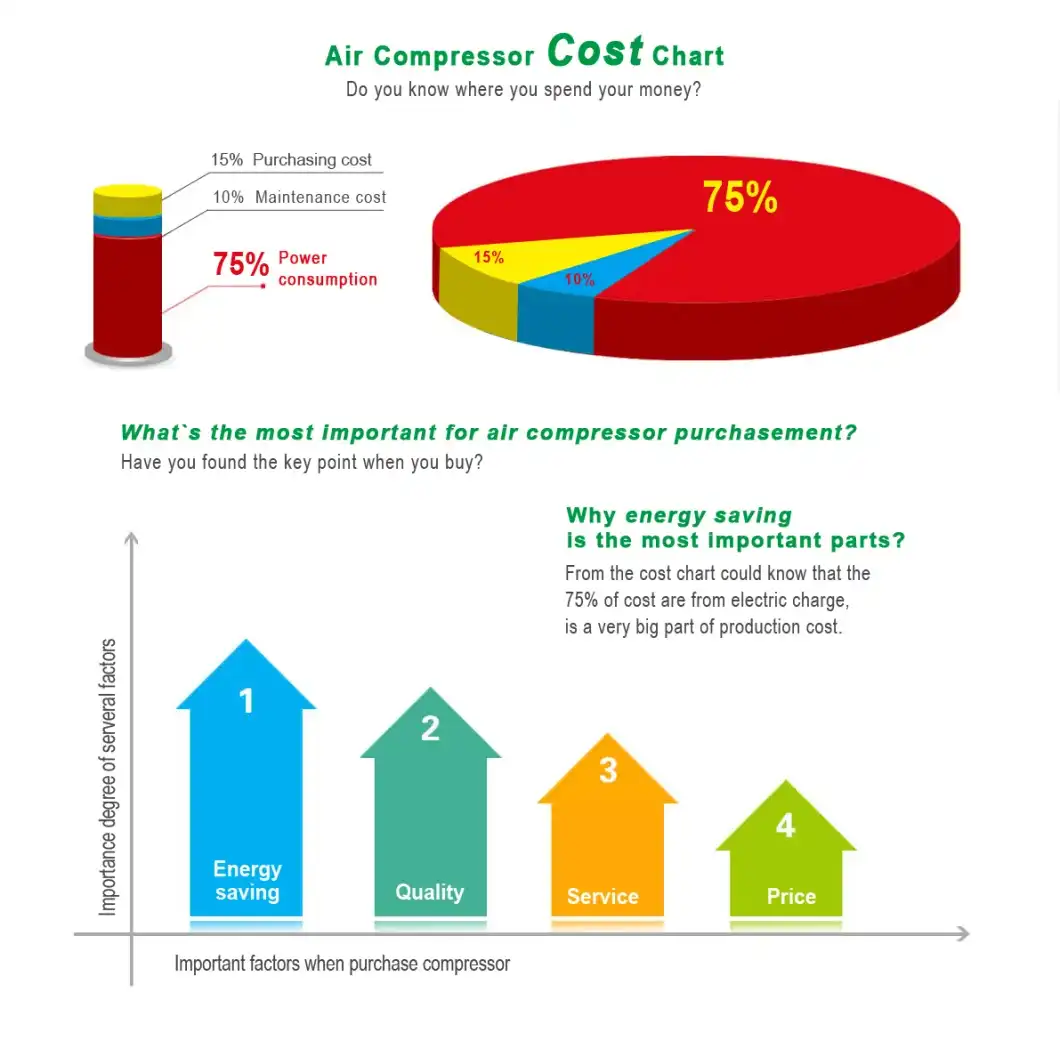
Air Compressors
Air compressors work by forcing atmospheric air through an inlet valve. As the piston moves down, it pulls atmospheric air into the chamber. As the piston rises, it forces the compressed air out of the cylinder through an exhaust valve. One of the most common types of air compressor is the reciprocating type. Another type of compressor is a single-stage piston. These types of compressors compress air in 1 stroke – equivalent to the complete rotation of the piston’s crankshaft.
These devices change electrical or mechanical energy into pressurized air. When air is compressed, its volume decreases, increasing its pressure. Air compressors typically have a minimum pressure of 30 bars. The lower pressure band is the range of air pressure. Most compressors are controlled separately, but network controls can be used to interconnect multiple compressors. This type of controller will not work for all types of compressors. There are other types of air compressors that can communicate with each other.
Compressed air has multiple applications in all kinds of industries. In agriculture, it can power pneumatically powered material handling machines for irrigation and crop spraying. Dairy equipments also use compressed air. Compressors are also used in the pharmaceutical industry for mixing tanks, packaging, and conveyor systems. Portable air compressors, which can be powered by diesel fuel, are frequently used at remote drilling sites. Portable air compressors are also commonly used in oil and gas. They can be used to remotely control valves and install reactor rods.
Whether you use an air compressor for agricultural purposes or in a manufacturing setting, there are some features to consider when choosing an air compressor for your needs. A good compressor will have a safety device. It will automatically shut off the input air and output air once sufficient compressing has been achieved. These features will help your air compressor remain efficient and protect your equipment. The safety device is an important feature of any air compressor to increase its overall efficiency.
Vane air compressors are the most common type. They are generally smaller and less powerful than reciprocating piston compressors, so you can use 1 of these for applications that are under 100 horsepower. The vane air compressors have low compression ratios and high capacities, but they are generally limited to low-power applications. Vane compressors tend to run hot, and they typically have a low compression ratio. It is important to choose the correct oil viscosity for your compressor.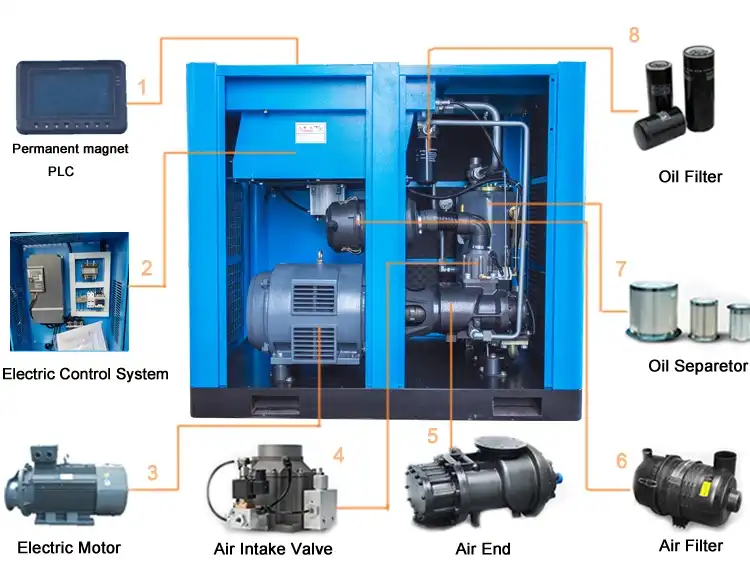
Single-stage models
When comparing single-stage air compressors, look for the term “stages.” Multi-stage compressors use 2 stages and can handle more capacity and pressure. One stage involves pressurizing air using a piston and a lower-pressure cylinder. This compressed air is then moved to a storage tank. Single-stage models tend to be more energy-efficient than their two-stage counterparts. But if you don’t need a high-pressure cylinder, a single-stage air compressor can be the best choice.
Although single-stage air compressors produce less power, they can produce enough air to power pneumatic tools and other pneumatic equipment. These single-stage units are most useful for smaller-scale home projects and DIY projects. For more industrial purposes, a dual-stage model is the best choice. But if you’re in a hurry, a single-stage unit may be sufficient. Ultimately, it depends on what you plan to do with the air compressor.
Single-stage air compressors feature a single cylinder, 1 piston stroke for each revolution of pressurized air. Single-stage compressors are typically smaller and more compact, making them a good choice for smaller work environments. Their cfm capacity (cubic feet per minute) is an important indicator of operating capacity. If you plan to use multiple pneumatic tools, you will probably need a higher cfm model. Similarly, the horsepower of single-stage compressors indicates its working capacity. One horsepower moves 550 pounds per foot per minute.
Multi-stage air compressors are generally more expensive and more energy-efficient than single-stage units, but they can offer higher air flow rates. While they may be more complex, they can lower general operating expenses. If you plan on using your air compressor for industrial or commercial use, a dual-stage model might be the best choice. However, if you’re planning to use the air compressor for mass production, a single-stage model may be the best choice.
Single-stage air compressors have the same piston size and number of inlets, while dual-stage models have a smaller first piston and a much longer second piston. Both have a cooling tube in between the 2 pistons to reduce the air temperature before the second round of compression. The single-stage model is typically small and portable, while the double-stage air compressor is stationary. These compressors can both be stationary and large.
Low-noise models
Despite its name, low-noise models of air compressors are not all the same. The noise level of a compressor can be affected by several factors, including the power source and proximity to the machine. Reciprocal compressors are generally louder than electric ones because of their many moving parts. By contrast, rotary-screw and scroll compressors have fewer moving parts and are quieter.
The noise level of a gas-powered air compressor can be extremely high, making it unsuitable for use indoors. To combat this problem, you can choose an electric model. The noise level of a compressor is primarily caused by motor friction. The cover of a piston is also a major factor in noise, as pistons with minimal covers will produce a lot of noise. Previously, oil was required for a quiet compressor. However, this has changed thanks to the medical industry’s demand for oil-free models.
The CZPT EC28M Quiet Air Compressor is another model that features quiet operation. This air compressor makes 59dB of noise. This level is low enough to allow you to carry on normal conversations while it cycles. In addition, this compressor has an industrial oil-free pump and a 2.8 Amp direct-drive induction motor. These 2 features make it a great choice for businesses.
Low-noise models of air compressors are available for the construction industry. However, these compressors are not necessarily low-quality, which is why you should consider the noise level of your air tool before purchasing one. The specialists at CZPT can recommend the low-noise models for your particular application and space. Noise can distract people who work near the air compressor. That is why many businesses now opt for these models.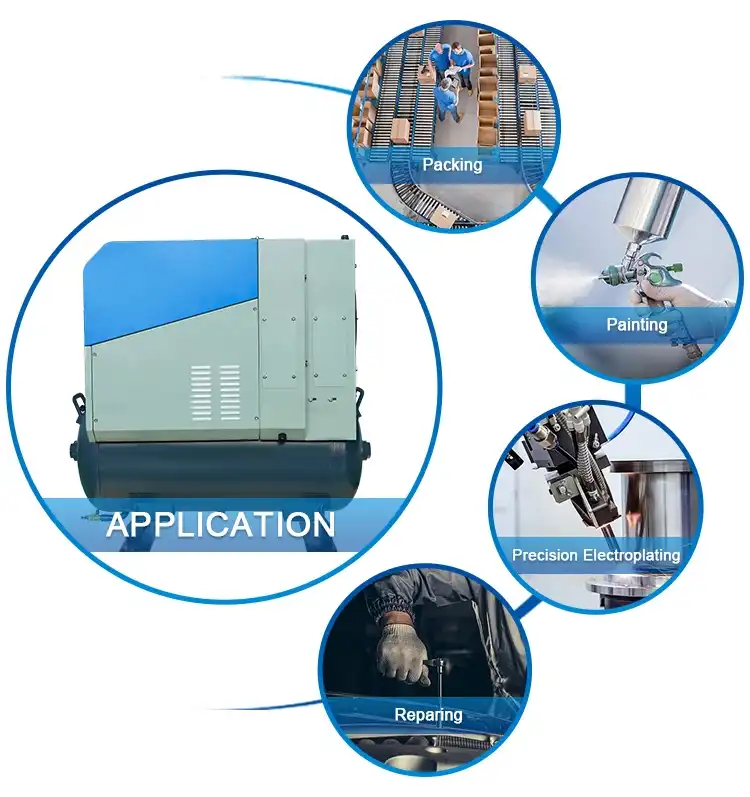
Oil-free models
A number of oil-free models of air compressors are available, but what makes them special? Oil-free compressors don’t contain oil, so they’re lubricated by grease instead. They’re a good choice if you’re working with a small compressor and don’t want to risk damaging it. On the other hand, oil-free models do generate significant amounts of heat, which can damage the compressor. Higher pressure can grind the compressor against itself, or even warp it.
A few words of knowledge can help you choose the best oil-free air compressor for your needs. For example, a compressor’s horsepower is a measurement of how powerful the motor is. Higher horsepower means a higher PSI or ACFM. You can also use the ACFM to compare the two. Scroll technology is a modern air compression system that uses a stationary and mobile spiral. This reduces the volume of air in the compressor by directing it to the center.
Purchasing an oil-free air compressor doesn’t have to be a daunting task, though. A good distributor can advise you on what type of oil-free air compressor is right for you. This way, you can save money and enjoy peace of mind while using your air compressor. And, of course, the best way to get a great deal on an air compressor is to speak to a distributor who is knowledgeable about the products available.
An oil-free air compressor is a great option for businesses that are sensitive to the contamination of air. For example, in the pharmaceutical and food industry, a minuscule oil could spoil a product or even damage production equipment. Oil-free air compressors generally have lower maintenance costs than oil-flooded models because there are fewer moving parts. Because of this, oilless air compressors require fewer maintenance and may still need to be replaced occasionally.
A few advantages of an oil-free air compressor over an oil-lubricated 1 include lower noise levels. Oil-free air compressors tend to be less noisy and run more quietly than oil-injected ones, but you should still carefully weigh the pros and cons before making a decision. Also, consider how much you use your air compressor before choosing a model. The pros outweigh the cons. In the end, you’ll be glad you chose an oil-free air compressor.

