
Wyślij dane zmieniające wybór kompresora
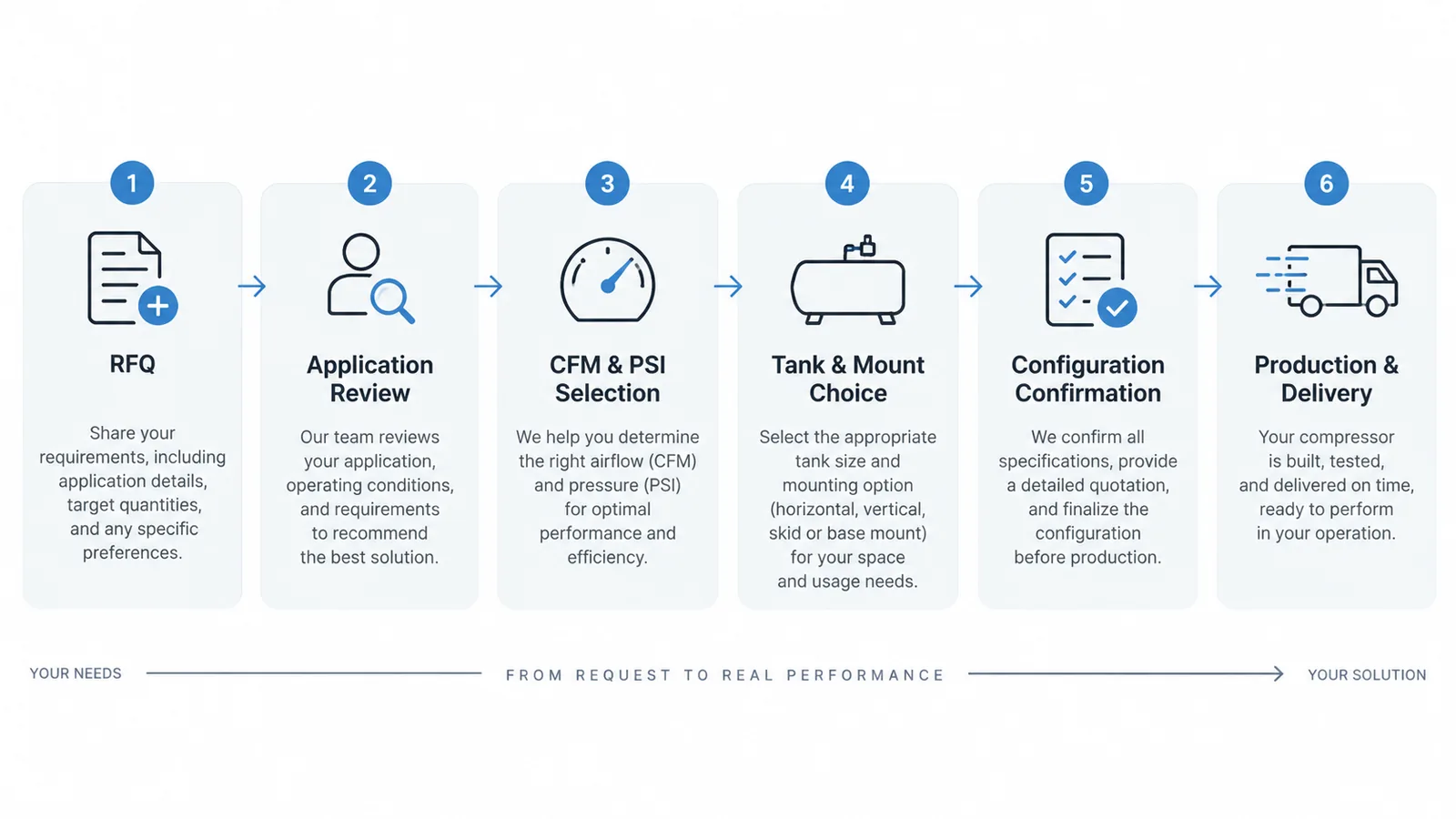
Aby uzyskać najbardziej użyteczną wycenę, prosimy o podanie wymaganego ciśnienia, przepływu powietrza, godzin pracy, napięcia/częstotliwości, ilości, miejsca przeznaczenia, warunków otoczenia oraz wszelkich wymagań dotyczących jakości powietrza. Jeśli wymieniasz istniejącą sprężarkę, podaj jej model i powód wymiany. W przypadku integracji z maszyną, prosimy o podanie wymiarów, położenia przyłączy oraz wszelkich rysunków definiujących dostępną przestrzeń roboczą.
Planowanie zamówień
Planowanie zamówień i minimalne zamówienie (MOQ): Standardowe zamówienia na sprężarki i części serwisowe są dostarczane w praktycznych ilościach produkcyjnych, a dokładne minimalne zamówienie (MOQ) różni się w zależności od modelu. Urządzenia o dużej wartości lub o dużych gabarytach można oceniać na podstawie całkowitej wartości zamówienia, a nie liczby sztuk. Nowi klienci mogą zamówić od 1 do 5 sztuk do oceny w cenie próbnej, jeśli wybrany produkt nadaje się do tego celu. Można łączyć wiele modeli, uzyskując wartość zamówienia 1500 USD. Materiały specjalne, wykończenia lub konfiguracje specyficzne dla danego procesu podlegają minimalnemu zamówieniu produkcyjnemu (MOQ). Aby zapewnić ekonomiczną obsługę eksportową i wsparcie inżynieryjne, nie realizujemy zamówień detalicznych na 1–2 sztuki. Prosimy o podanie modelu, wymaganej ilości i miejsca przeznaczenia, a my zaproponujemy praktyczną kombinację zamówień do wyceny.
E-mail: sprzedaż@gaspowered-aircompressor.com
Adres: Sandan-ro | Danwon-gu | Ansan-si | Gyeonggi-do | Korea
Co się dzieje po Twoim zapytaniu
Dokonujemy przeglądu punktu pracy, identyfikujemy brakujące dane techniczne i porównujemy zapytanie z obecnymi rodzinami sprężarek. W przypadku, gdy możliwych jest kilka konfiguracji, odpowiedź powinna wyjaśniać, co zmienia wybór, a nie po prostu wymieniać największy model. Specjalne warunki procesowe, wysokie ciśnienie i wymagania dotyczące czystego powietrza podlegają dodatkowym kontrolom integracyjnym.
Warunki pracy, które należy określić w specyfikacji
Przydatna specyfikacja zapytania ofertowego (RFQ) i przeglądu projektu sprężarki odróżnia normalny punkt pracy od najbardziej wymagających warunków realistycznych. Należy odnotować temperaturę otoczenia, czystość powietrza wlotowego, wilgotność, wysokość nad poziomem morza (jeśli ma to znaczenie), godziny pracy, uruchomienia lub zmiany obciążenia oraz minimalne dopuszczalne ciśnienie u użytkownika. W przypadku istniejącego systemu należy zwrócić uwagę, czy zapotrzebowanie jest stabilne, czy sezonowe, oraz czy problemy z ciśnieniem występują podczas jednej konkretnej zmiany lub etapu procesu. Te obserwacje często wyjaśniają, dlaczego dwie instalacje wykorzystujące tę samą nominalną moc sprężarki mogą działać inaczej.
Szczegóły dystrybucji znajdują się w tej samej specyfikacji. Średnica rur, długość węży, filtry, osuszacze, zawory i szybkozłącza – wszystkie te elementy powodują opór. Sprężarka nie powinna być automatycznie zwiększana w celu skompensowania ograniczeń w sieci dystrybucyjnej. Należy zmierzyć ciśnienie w pobliżu sprężarki i ponownie u użytkownika w godzinach szczytowego zapotrzebowania; duża różnica wskazuje na straty w systemie, a nie na niewystarczającą wydajność sprężania. To rozróżnienie zapobiega niepotrzebnej rozbudowie sprzętu i ułatwia weryfikację działań naprawczych.
Obsługa, uruchomienie i długoterminowa dyscyplina operacyjna
Dostęp serwisowy powinien zostać zapewniony przed dostawą maszyny. Należy zapewnić łatwy dostęp do filtrów, odpływów, paneli sterowania, chłodnic i punktów przyłączeniowych oraz unikać umieszczania sprężarki w miejscu, w którym gorące powietrze wylotowe jest zasysane z powrotem do wlotu. Podczas rozruchu należy ustalić punkt odniesienia, który obejmuje ciśnienie obciążenia, prąd roboczy, temperaturę, zachowanie odzysku lub obciążenia, funkcję odpływu oraz obserwacje nietypowych hałasów. Ten punkt odniesienia jest bardziej przydatny niż standardowy okres między przeglądami, ponieważ daje technikom możliwość porównania stanu technicznego.
Podczas eksploatacji należy badać trendy, a nie pojedyncze objawy. Rosnąca temperatura, dłuższy czas regeneracji, częste cykle lub stopniowy spadek ciśnienia w punkcie poboru mogą wskazywać na zatkanie filtra, nieszczelność, pogorszenie chłodzenia lub zmianę zapotrzebowania instalacji. Należy odnotować zmiany i potwierdzić ich skutki po konserwacji. W przypadku urządzeń wysokociśnieniowych, izolacja i elementy ciśnieniowe w dół strumienia wymagają szczególnej uwagi; w przypadku czystego powietrza procesowego, uzdatnianie w dół strumienia i kontrola kondensatu pozostają ważne nawet wtedy, gdy stopień sprężania jest bezolejowy.