
产品描述
产品描述
冷却系统配备大尺寸散热器和膨胀水箱
重型底盘
内置绝缘和防震块
免维护电池
电池充电器用交流发电机
电池充电器
电池电缆和支架
电池隔离开关
!主断路器
自动启动控制系统
燃油水分离器
燃油液位传感器
机油底壳泵
满负荷测试
全面安全防护
!紧急停止按钮
CCW-375T5 powered by:NTAA855-G7
| 柴油发电机组特点:功率因数=0.8,三相 | ||||||||||
| 生成集性能 | 50赫兹 | |||||||||
| 服务 | 富血小板血浆 | 支持 | ||||||||
| 额定输出 | 千伏安 | 375 | 413 | |||||||
| 有功功率输出 | 千瓦 | 300 | 330 | |||||||
| 额定速度 | 转速 | 1500 | ||||||||
| 标准电压 | V | 400/230 | ||||||||
| 可用电压 | V | 380/220 – 415/240 | ||||||||
| 原动机性能 1500 转/分 | ||||||||||
| 服务 | 富血小板血浆 | 支持 | ||||||||
| 额定输出 | 柯威 | 343 | 377 | |||||||
| 制造商 | 康明斯 | |||||||||
| 四冲程柴油发动机 – 喷射式 | 直接的 | |||||||||
| 吸入式 | Turbocharged&Air-Air Cooled | |||||||||
| 气缸数量及排列方式 | 6 -L | |||||||||
| 缸径×行程 | 毫米 | 140X152 | ||||||||
| 总排量 | L | 14 | ||||||||
| 冷却系统 | 水 | |||||||||
| 排放认证 | 不适用 | |||||||||
| 压缩比 | 14:1 | |||||||||
| 单位燃油消耗量(PRP) | 升/小时 | 85,4 | ||||||||
| 单位油耗(满负荷) | % | <0.1 | ||||||||
| 总冷却液容量 | L | 60,6 | ||||||||
| 燃油系统 | 类型 | 直接注射 CZPT PT(E) | ||||||||
| 同步发电机 GTL | ||||||||||
| 模型 | K300G4 | |||||||||
| 波兰人 | 数字 | 4 | ||||||||
| 绕组连接(标准) | 星级系列 | |||||||||
| 绝缘 | 班级 | H | ||||||||
| 外壳(符合IEC-34-5标准) | IP23 | |||||||||
| 阶段 | 3+N | |||||||||
| 电压调节器 | A.V.R (SX440) | |||||||||
| 稳压精度 | 从空载到满载,cosΦ=0.8-1.0,误差在±1.0%以内。 | |||||||||
| CZPT发电机组使用的交流发电机符合以下标准的要求:BS5000、VDE571、NEMA MG1-32、IEC34、CA C22.2-100、AS1359 | ||||||||||
| 发电机组安装数据 1500 转/分 | ||||||||||
| 排气系统 | ||||||||||
| 满负荷时的排气温度 | 摄氏度 | 451 | ||||||||
| 华氏度 | 843,8 | |||||||||
| 废气流量 | 升/秒 | 1150 | ||||||||
| 最大允许背压 | 千帕 | 10 | ||||||||
| 空气需求 | ||||||||||
| 100% 负载/额定转速下的燃烧空气需求 | 升/秒 | 510 | ||||||||
| 立方英尺/分钟(立方英尺/分钟) | 1080,0 | |||||||||
| 电启动系统 | ||||||||||
| 标准电池充电系统 | 一个 | 35 | ||||||||
| 最低推荐电池容量 - 冷浸泡 @ 0 °F (-18 °C) | CCA | 900 | ||||||||
| 辅助电压 | V | 24 | ||||||||
| 润滑系统 | ||||||||||
| 润滑油系统,包括油底壳、过滤器等。 | L | 38,6 | ||||||||
西湖区选
公司信息
杭州中电动力系统有限公司成立于2009年,是一家位于中国杭州的专业发电解决方案供应商,我们从事工业柴油发电机、移动柴油发电机、泵用柴油发电机、燃气发电机、空气压缩机和照明塔的研发、生产、销售和服务。
我们提供的发电机可以是开放式底座式、防风雨式和隔音式,功率范围从 5 千瓦到 4000 千瓦;
燃气发电机功率范围从 12 千瓦到 1500 千瓦;
空气压缩机的流量范围为 55 CFM 至 1600 CFM,最大压力为 34.5 巴;
照明塔的设计旨在提供最广泛的选择,多种灯具解决方案,包括金属卤化物泛光灯和 LED 灯,以满足不同的应用需求,此外,它还完全可定制。
Choosing the Right Air Compressor For Your Home
You will find that air compressors are indispensable tools for a variety of situations, including garages, home workshops, and basements. These tools can power a variety of tools, and each model is sized to suit the job at hand. Because air compressors have only 1 motor, they are lightweight, compact, and easy to handle. Using 1 air compressor to power several tools will also reduce the wear and tear on individual components. This article will introduce some important characteristics to look for when choosing the right air compressor for your home.
正位移
A positive displacement compressor applies pressure to a fluid, whereas a centrifugal 1 does the opposite. A positive displacement compressor creates the desired pressure by trapping air and increasing its volume. Its discharge valve releases the high-pressure gas. These compressors are used in industrial applications and nuclear power plants. The difference between a positive and negative displacement compressor is that a positive displacement compressor can compress and release air at a consistent rate.
A positive displacement air compressor uses a reciprocating piston to compress air. This reduces the volume of the air in the compression chamber, and a discharge valve opens when the pressure reaches the desired level. These compressors are used in bicycle pumps and other pneumatic tools. Positive displacement air compressors have multiple inlet ports and have several configurations. Positive displacement air compressors have a single-acting and double-acting piston, and can be oil-lubricated or oil-free.
A positive displacement air compressor is different from a dynamic compressor. It draws air into the compression chambers and then releases the pressure when the valve is opened. Positive displacement compressors are common in industrial applications and are available in single-acting, double-acting, and oil-lubricated models. Large piston compressors have ventilated intermediate pieces and crossheads on gudgeon pins. Smaller models have permanently sealed crankcases with bearings.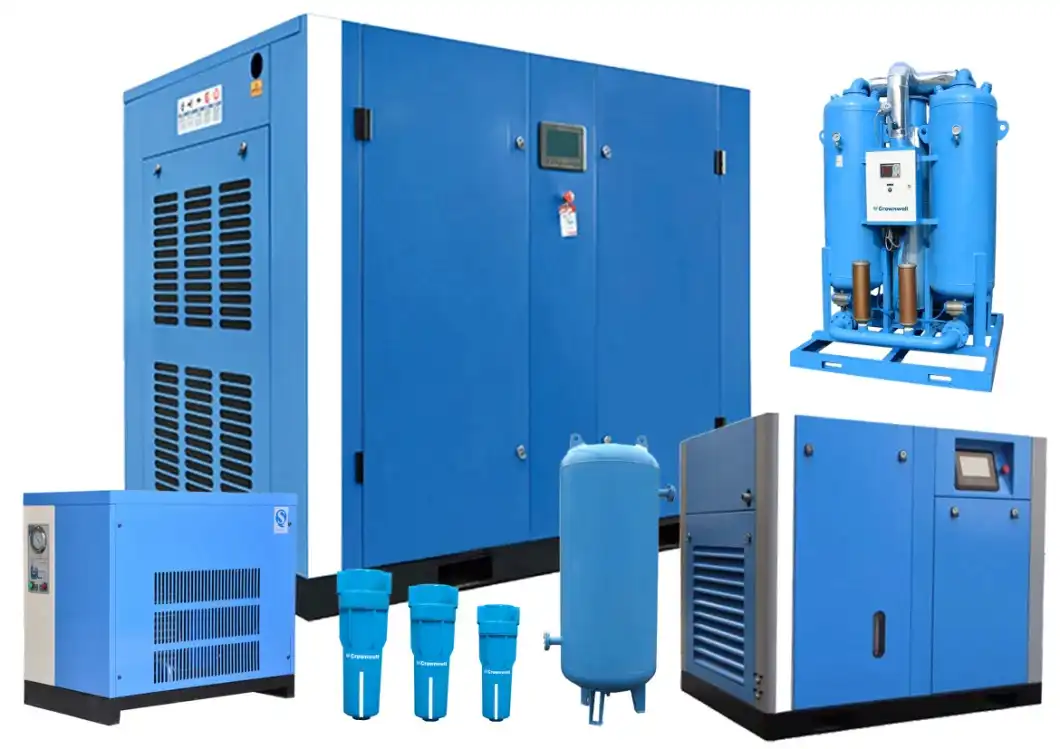
无油
Oil-free air compressors have some advantages over their oil-lubricated counterparts. They do not require lubrication oil because they are coated with Teflon. The material has 1 of the lowest coefficients of friction and is layered, so it slides past other layers with little effort. Because of this, oil-free compressors tend to be cheaper and still deliver comparable performance. Oil-free compressors are a good choice for industrial applications.
The life of an oil-free air compressor is significantly longer than an oil-lubricated counterpart. These models can operate up to 2,000 hours, 4 times longer than the average oil-lubed compressor. Oil-free compressors also have a significantly lower operating noise than their oil-lubricated counterparts. And because they don’t need oil changes, they are quieter. Some even last up to 2,000 hours.
An oil-free air compressor is a good choice if your application requires high levels of purity. Several applications require ultra-pure air, and even a drop of oil can cause product spoilage or damage to production equipment. In addition to the health risks, an oil-free air compressor reduces the costs associated with oil contamination and minimizes leaks. It also eliminates the need for oil collection, disposal, and treatment.
A typical oil-free air compressor is very efficient, requiring only about 18% of the full load horsepower. However, oil-free compressors have a higher risk of premature failure and are not recommended for large-scale industrial applications. They may also use up to 18% of the compressor’s full capacity. They may sound appealing, but you must make sure you understand the benefits of an oil-free air compressor before choosing 1 for your industrial applications.
单级
A single-stage air compressor is designed to provide the power for a single pneumatic tool or device. These machines are generally smaller than two-stage compressors and produce less heat and energy. These machines aren’t designed for heavy-duty industries, but they are still highly effective for a variety of applications, including auto shops, gas stations, and various manufacturing plants. They can also be used in borewells, as they are suitable for small spaces with low air flow requirements.
A single-stage air compressor has 1 cylinder and 2 valves – the inlet and the delivery valves. Both of these valves function mechanically, with the inlet valve controlling torque and the delivery 1 controlling air pressure. Generally, single-stage compressors are powered by a gas engine, but there are also electric models available. The single-stage air compressor is the most common type of air compressor. It has a single cylinder, 1 piston, and 1 air cylinder.
The single-stage air compressors are used for small projects or personal use. A two-stage air compressor is more effective for industrial projects. Its longer air end life makes it more efficient. It is also more efficient for use in the automotive industry, where the engine has many cylinders. In general, single-stage compressors require a higher power level. The single-stage model is ideal for small projects, while a two-stage 1 is suitable for larger-scale arsenals.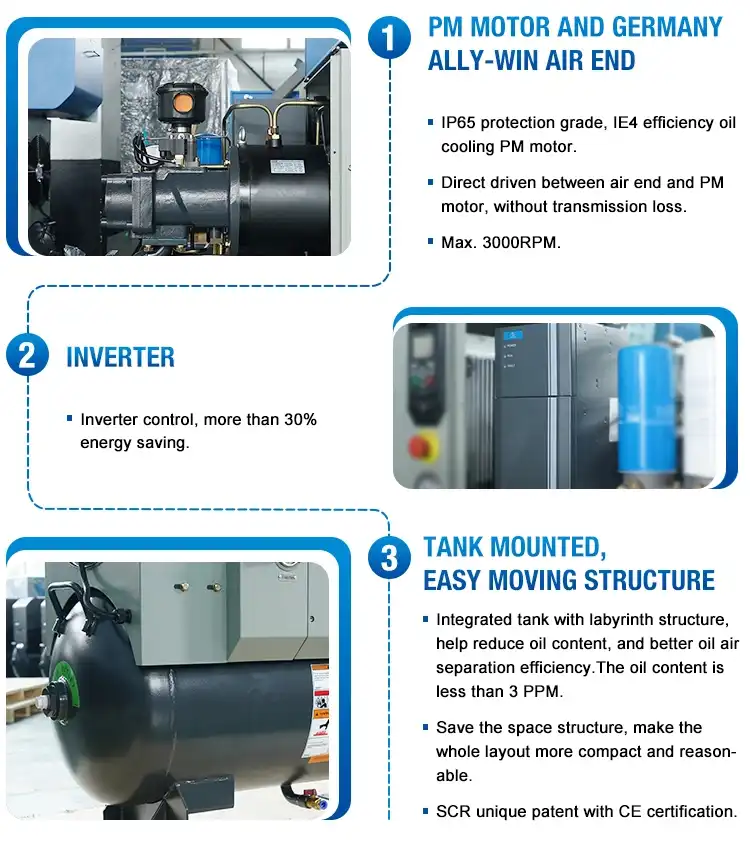
CFM
The cubic foot-per-minute (CFM) of an air compressor is the output of the machine. In order to calculate the CFM level, start by looking at the compressor’s specifications. You should know how many cubic feet the unit can hold and how many pounds per square inch it can compress. Once you have these information, you can calculate the CFM. Now you can use these numbers to select an appropriate air compressor for your needs.
The most common way to increase the CFM of an air compressor is to turn the regulator down. By turning the dial down, the air compressor will produce more than 10 CFM. You can also try connecting 2 output valves. Make sure that the settings are adjusted properly before you begin. This will ensure that your air compressor is functioning at its maximum efficiency and lifespan. To increase the CFM of your air compressor, first check that your regulator is calibrated for the desired pressure level.
To calculate the CFM of an air compressor, first determine the tank volume of the machine. Then, multiply this volume by the time it takes to fill the tank. Then, divide the result by 60 seconds to calculate the CFM. Once you know how much air your machine can hold, you can choose a suitable air compressor. If you’re working in a confined area, you should buy a tool with a large tank.
PSI
The PSI of an air compressor is the pressure that it can output. A typical air compressor has a gauge connected to the airline at the bottom, next to it, or between the two. The gauge tells the actual pressure of the air compressor, while the cut-out pressure is determined by the manufacturer. The manufacturer recommends that you set the cut-out pressure 20 to 40 PSI higher than the factory recommended pressure. If you want to set the pressure for your nail gun, you can use the cut-in and cut-out pressures on your compressor, and the tank won’t exceed this range.
The PSI of an air compressor measures the force that it can deliver, which is often in pounds per square inch. For most air tools, you need at least 40 to 90 psi. In general, reciprocating air compressors work on an on/off basis. This relationship is known as the duty cycle. All air compressors are rated for a particular duty cycle, such as 50 percent on and 20-5 percent off.
The Psig of an air compressor is not free, as many people believe. The PSI of an air compressor is not free, but it is essential to maintain it for safe operations. If you’re having trouble maintaining a consistent pressure, consider turning down the PSI of your compressor by 2 psig. This will determine the critical pressure for the machine. You’ll also increase the amount of energy in the system by 1 percent.
Power source
The power source for an air compressor is crucial in its operation. Without the correct voltage and amperage, air compressors will not function properly. The power source must be close to the compressor so that it can plug into an electrical outlet. If it is too far from the outlet, the compressor may not be able to build enough pressure. When this happens, the fuse inside the air compressor will turn off to protect the user. The power source should be a safe distance from the compressor.
Most manufacturers do not specify the power source for an air compressor. Depending on the horsepower, the compressor will require approximately 4 amps of power. A one-horsepower compressor would draw about 12 amps. If it were powered by a typical 120-volt household supply, its motor would exceed the 15-amp breaker capacity. A larger air compressor, however, will require a separate 15-amp power source, making it impossible to use it with this type of power source.
The power source for an air compressor is typically electrical alternating current (AC) that is equivalent to the voltage on a standard wall outlet. A three-phase air compressor, on the other hand, requires a special AC supply with 3 electrical offset pulses. Regardless of the type of air compressor, the power source must be compatible with the incoming power service. One of the most common problems when attempting to connect an air compressor to an AC power source is undersized wire. This results in low voltage and high amperes, tripping of over-load relays and blown fuses.

