
Définir d'abord le problème opérationnel
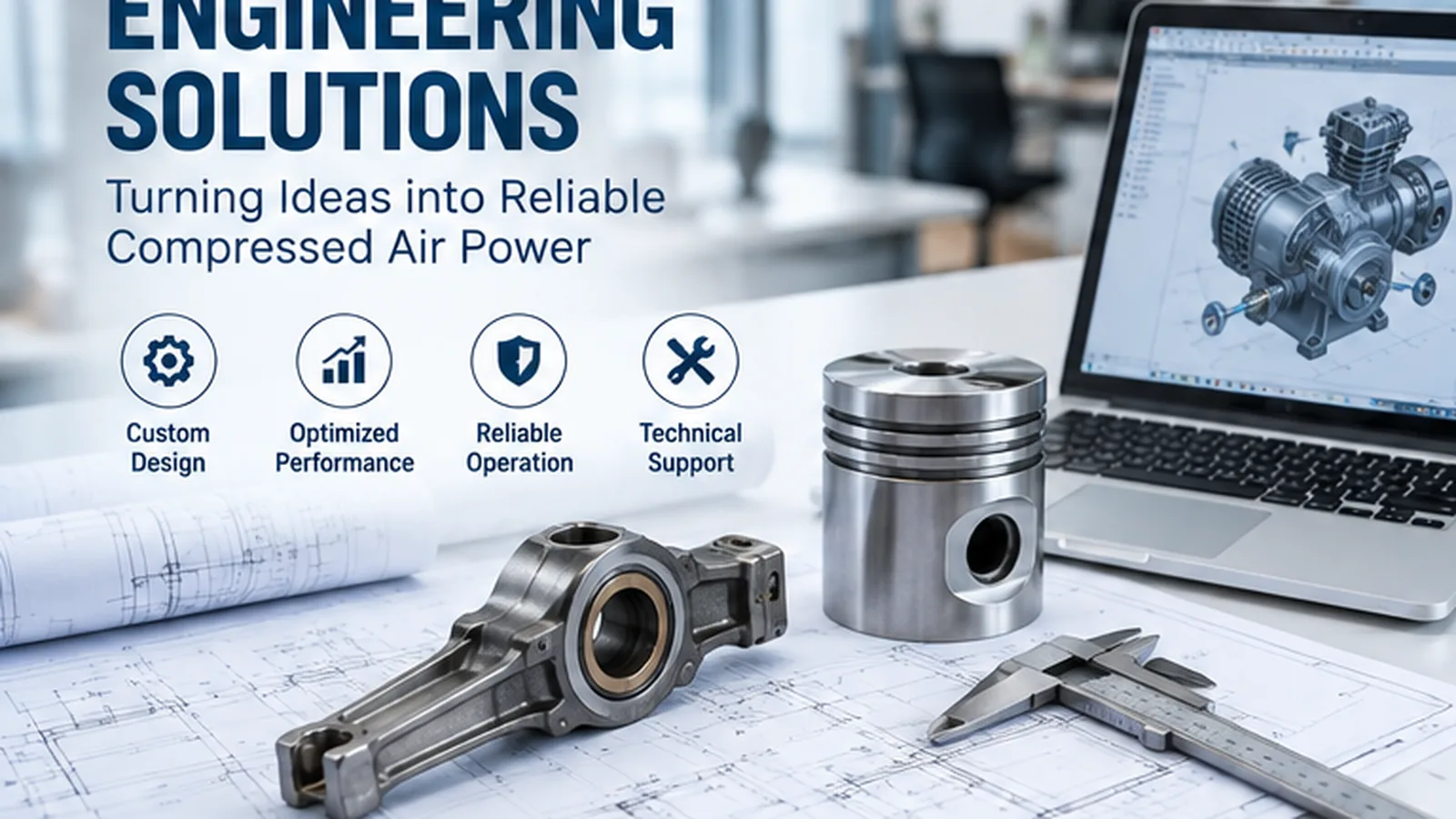
Le guide « Ingénierie et sélection des compresseurs d'air » s'articule autour d'une décision d'achat fondamentale : traduire la pression, le débit, la puissance requise et l'environnement en un cahier des charges précis pour un compresseur. Cette page détaille les conditions de fonctionnement, les critères de sélection, les vérifications d'installation et les informations à inclure dans une demande de devis. Les projets d'air comprimé se complexifient lorsque les acheteurs partent du nom du compresseur et remontent le fil des étapes. Une approche plus efficace consiste à définir l'usage prévu de l'air, la pression nécessaire au point d'utilisation, l'évolution du débit et les conditions environnementales susceptibles de réduire les performances.
Pour la conception des compresseurs d'air, il est essentiel de documenter la durée maximale de la demande continue, le nombre d'utilisateurs simultanés, la longueur des tuyaux, la variation de pression admissible, la température ambiante, les risques de contamination et les contraintes électriques. Ces données permettront de déterminer si un compresseur compact, un compresseur à vis à fonctionnement continu ou un système moyenne/haute pression justifie une étude plus approfondie.
Convertir le processus en une demande d'air mesurable
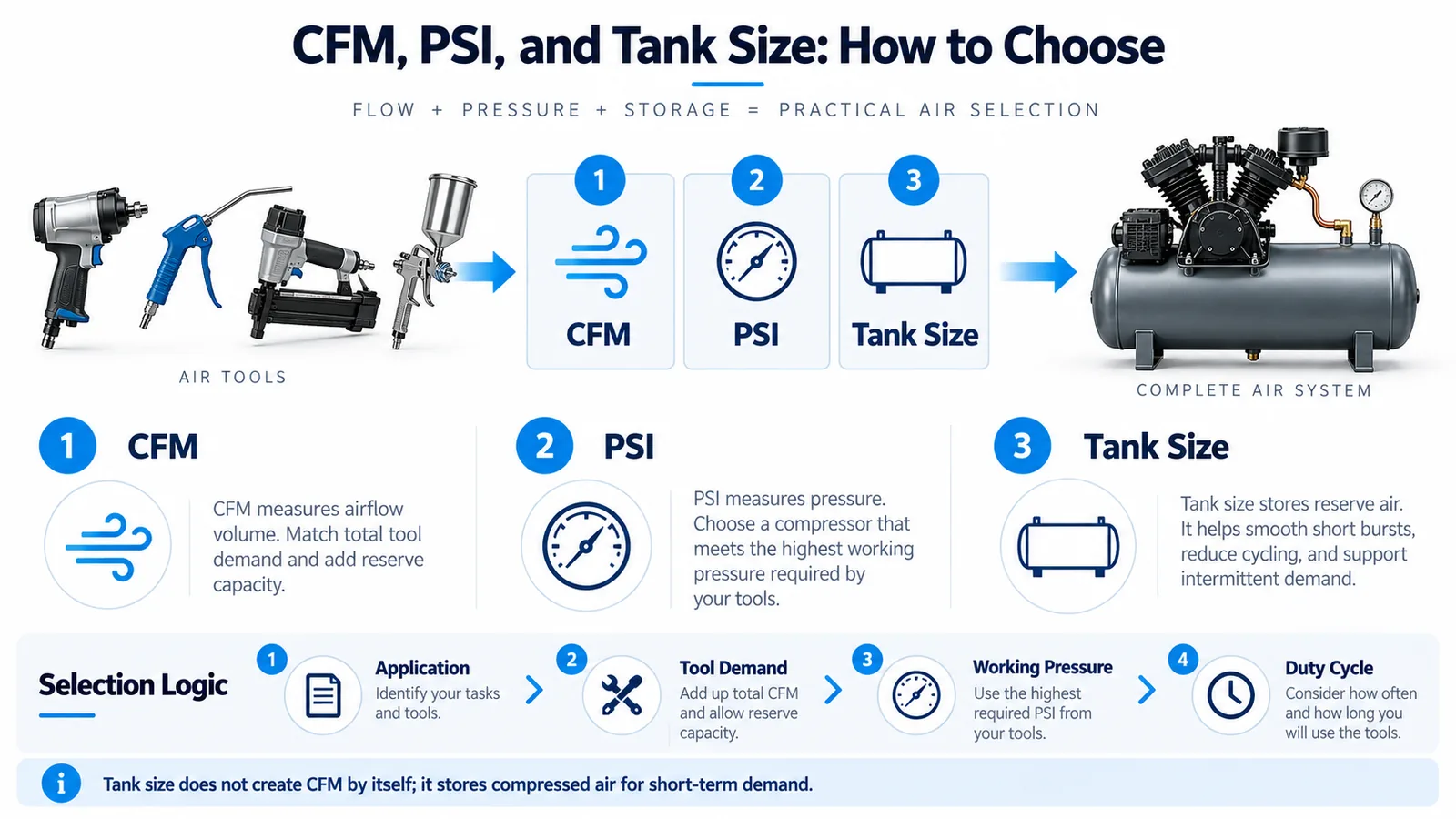
Répertoriez chaque consommateur pneumatique avec sa pression de service, son débit nominal et son facteur d'utilisation prévu. Distinguez les consommateurs continus des consommateurs à pics de consommation ponctuels. Additionnez les débits simultanés possibles, puis comparez ce total au débit du compresseur à la pression correspondante. N'ajoutez pas une marge de sécurité excessive qui masquerait l'incertitude ; documentez les données connues, les estimations et la croissance réellement attendue.
La pression doit être mesurée sur le lieu de travail. Les filtres, déshydrateurs, vannes, raccords rapides et les tuyaux longs de sous-dimensionnement consomment de la pression. Si un outil nécessite une pression stable, mais que le compresseur est choisi précisément pour cette valeur, les pertes en aval peuvent rendre le système insatisfaisant, même si le compresseur fonctionne normalement.
Choisissez l'architecture du compresseur en fonction du service.
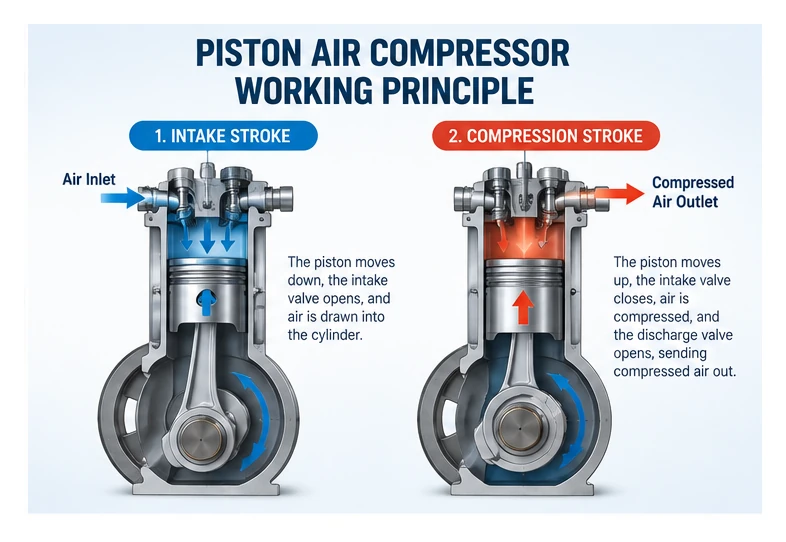
Les groupes compresseurs sans huile à réservoir peuvent s'avérer pratiques pour les demandes intermittentes, les installations compactes et les opérations de maintenance. Les compresseurs à vis sont plus adaptés aux applications exigeant de longues périodes de fonctionnement et un débit stable. Les systèmes à vis moyenne et haute pression sont destinés aux applications où la pression d'air comprimé standard de l'usine est insuffisante. L'architecture doit être conçue en fonction du profil de charge et non par habitude.
Le mode de refroidissement, l'accessibilité pour la maintenance et le traitement de l'air sont tout aussi importants. Un groupe compresseur fonctionnant en continu, installé dans un local chaud et clos, peut être moins performant qu'un groupe plus petit installé dans un espace correctement ventilé. Les applications à procédés propres peuvent nécessiter une filtration ou un séchage supplémentaire, même lorsque l'étage de compression est exempt d'huile.
Contrôles d'intégration et de sécurité
Avant la mise en service, vérifiez l'alimentation électrique, la protection contre les surintensités, la mise à la terre, l'isolation, le drainage, la tuyauterie sous pression et la ventilation adéquate. Pour les applications à haute pression, chaque vanne, flexible, filtre, réservoir et raccord en aval doit être dimensionné pour la pression maximale réelle. Ne présumez jamais qu'un composant convient simplement parce que son filetage est compatible.
Consignez les données de mise en service, notamment la pression à vide et en charge, le courant nominal, la température, les contrôles d'étanchéité, le fonctionnement de la purge et les observations de bruits anormaux. Ce document servira de référence pour le dépannage ultérieur et permettra de distinguer une perte de pression du système d'un problème de compresseur.
Implications en matière de maintenance
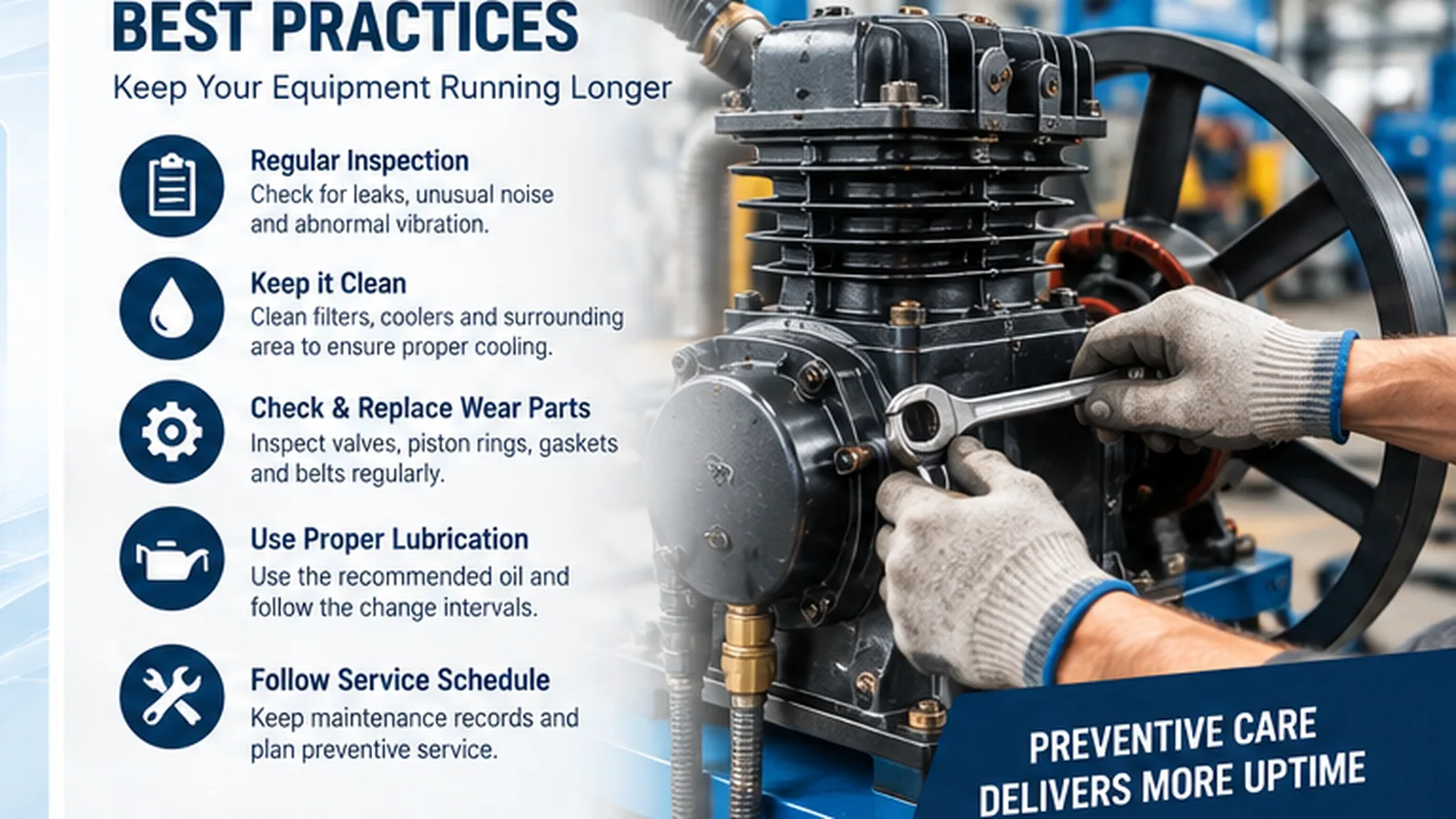
La fréquence de maintenance doit tenir compte de la propreté de l'air d'admission, de l'humidité, des heures de fonctionnement et de la température, et non pas uniquement du calendrier. Vérifiez les filtres, les purgeurs, les raccords, les surfaces de refroidissement et tout circuit de lubrification ou d'eau requis. En cas de vibrations, de chaleur anormale, d'allongement du temps de récupération ou d'instabilité de pression, il est important d'enquêter rapidement, car ces symptômes peuvent indiquer des obstructions, des fuites ou des composants usés.
Veillez à ce que l'accès pour l'entretien soit dégagé et consignez les interventions. Remplacer systématiquement un filtre sans s'occuper de la poussière accumulée à l'entrée d'air n'est pas une stratégie de maintenance ; c'est le signe que les conditions d'installation doivent être améliorées.
Préparez une demande de devis qui puisse être conçue
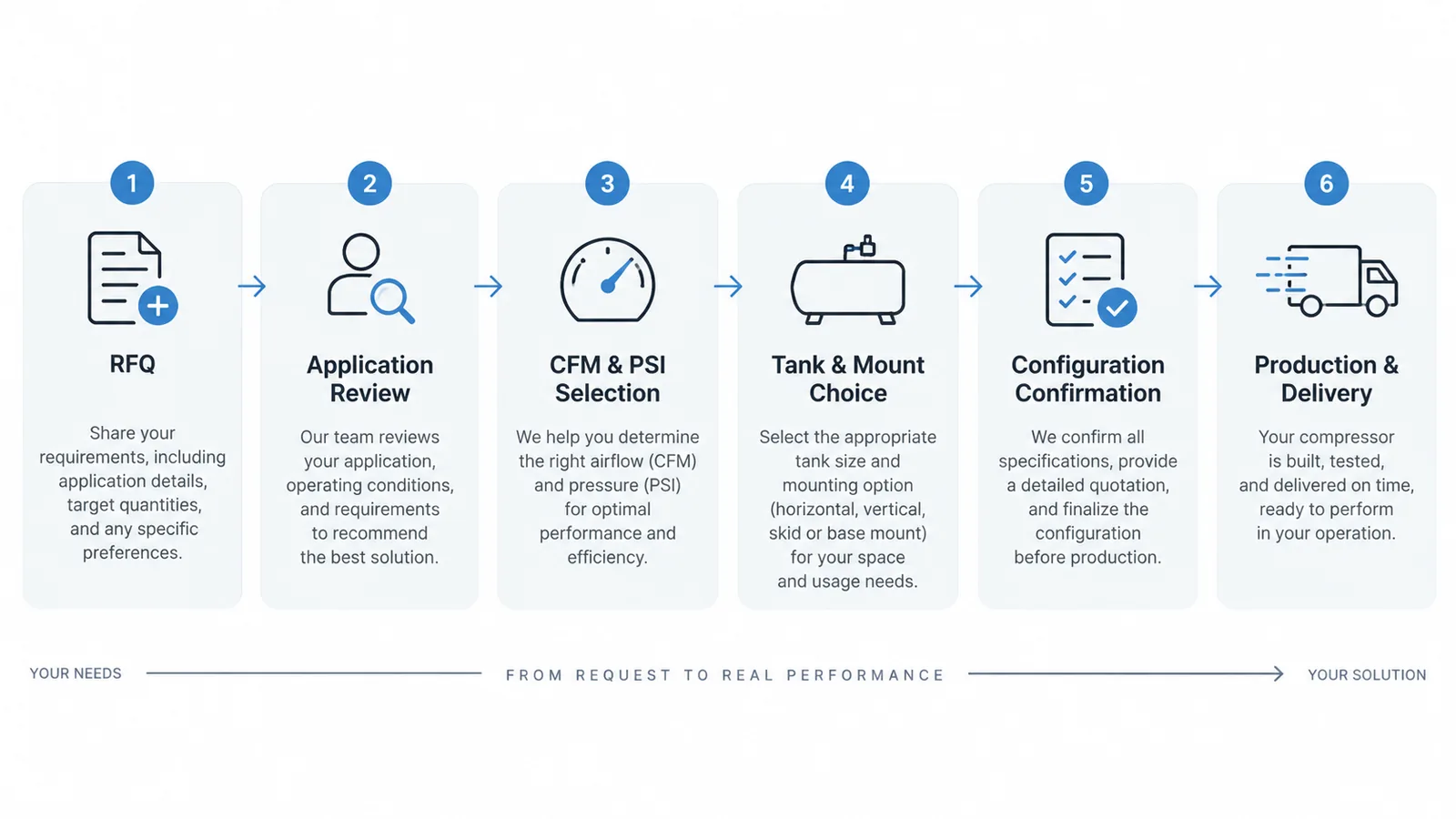
Une demande de devis utile comprend la pression cible au point d'utilisation, le débit requis, la durée de pointe, les heures de fonctionnement, la tension/fréquence, l'environnement, les exigences en matière de qualité de l'air, la quantité, la destination et l'espace d'installation. Incluez les détails du procédé en aval lorsque les limites de pression ou de contamination sont critiques. Si un schéma est disponible, indiquez la position du raccordement et les dimensions maximales.
Ces informations permettent au fournisseur de comparer les configurations sans faire d'hypothèses. Si une valeur est inconnue, indiquez-le et précisez les informations relatives à la machine ou à l'outil qui génère la demande.
FAQ
Quel est le premier numéro à confirmer ?
Vérifiez la pression requise au point d'utilisation et le débit d'air nécessaire à cette pression. Ces deux valeurs définissent le point de fonctionnement optimal.
Dois-je prévoir les extensions futures ?
Oui, mais il faut quantifier la croissance réaliste. Une charge future définie est utile ; une marge trop importante peut rendre le système inefficace.
Quand un compresseur haute pression est-il justifié ?
Lorsque le procédé requiert réellement une pression supérieure à celle de l'air comprimé standard de l'usine, ce besoin doit être défini par le procédé en aval et les équipements conçus pour supporter la pression nominale, et non par une volonté de disposer d'une réserve supplémentaire.
Conditions de fonctionnement qui doivent être mentionnées dans les spécifications
Les spécifications techniques d'un compresseur d'air permettent de distinguer son point de fonctionnement normal de ses conditions de fonctionnement réalistes les plus exigeantes. Il convient de consigner la température ambiante, la propreté de l'air d'admission, l'humidité, l'altitude (le cas échéant), les heures de fonctionnement, les démarrages ou les variations de charge, ainsi que la pression minimale admissible chez l'utilisateur. Pour un système existant, il est important de noter si la demande est stable ou saisonnière et si des problèmes de pression surviennent lors d'une étape ou d'un poste de travail spécifique. Ces observations permettent souvent d'expliquer les différences de performances entre deux installations utilisant un compresseur de même taille nominale.
Les détails de la distribution doivent figurer dans le même cahier des charges. Le diamètre des tuyaux, la longueur des flexibles, les filtres, les déshydrateurs, les vannes et les raccords rapides sont autant de facteurs qui génèrent des résistances. Il est déconseillé de surdimensionner automatiquement un compresseur pour compenser un réseau de distribution restrictif. Mesurez la pression à proximité du compresseur, puis à nouveau chez l'utilisateur lors des pics de consommation ; une différence importante indique une perte de charge du système plutôt qu'une capacité de compression insuffisante. Cette distinction permet d'éviter un surdimensionnement inutile de l'équipement et facilite la vérification des mesures correctives.
Discipline de maintenance, de mise en service et d'exploitation à long terme
L'accès pour la maintenance doit être prévu avant la livraison de la machine. Veillez à ce que les filtres, les purgeurs, les panneaux de commande, les refroidisseurs et les points de raccordement soient facilement accessibles et évitez de placer le compresseur à un endroit où l'air chaud des gaz d'échappement est aspiré. La mise en service doit établir des valeurs de référence incluant la pression en charge, le courant de fonctionnement, la température, le comportement en reprise ou en charge, le fonctionnement du purgeur et les observations de bruits anormaux. Ces valeurs de référence sont plus utiles qu'un intervalle de maintenance standard car elles offrent aux techniciens un état de fonctionnement normal connu, servant de point de comparaison.
Lors de la maintenance, il est important d'analyser les tendances plutôt que les symptômes isolés. Une hausse de température, un temps de récupération plus long, des cycles fréquents ou une perte progressive de pression au point d'utilisation peuvent indiquer un colmatage du filtre, une fuite, une détérioration du système de refroidissement ou une modification des besoins de l'installation. Il convient de consigner les changements observés et d'en vérifier l'effet après la maintenance. Pour les équipements haute pression, l'isolation et les composants aval résistants à la pression nécessitent une attention particulière ; pour l'air de process propre, le traitement aval et la maîtrise des condensats restent essentiels, même lorsque l'étage de compression est exempt d'huile.
Appliquer le contrôle d'ingénierie à une famille de produits
Utilisez les calculs de cette page pour comparer les familles de compresseurs disponiblesPour des exemples concrets de missions, examiner la planification de l'applicationEnsuite, transmettez le point de fonctionnement confirmé via le formulaire de demande de devis. Appliquez le calcul au point d'utilisation réel et non à la sortie du compresseur. Notez la longueur des conduites ou des flexibles, les équipements de traitement, la perte de charge et tout réservoir de stockage déjà présent dans le système. Un dimensionnement judicieux garantit une marge de fonctionnement raisonnable sans recourir à un surdimensionnement arbitraire pour masquer des données de demande manquantes. Si plusieurs consommateurs partagent un collecteur, identifiez ceux qui peuvent fonctionner simultanément et ceux qui sont incompatibles. Le point de fonctionnement obtenu pourra ensuite être comparé aux données du modèle et vérifié lors de la mise en service.